
SQF CERTIFICATION CONSULTING · GFSI-BENCHMARKED · CHICAGO & NORTHERN ILLINOIS
Food Safety & SQF Consultant in Chicago
Work with a certified SQF consultant in Chicago to build a food safety system that holds up on audit day and on an ordinary Tuesday. We deliver HACCP-based food safety plans, SQF documentation, supplier and traceability programs and full mock audits for food manufacturers, bakeries, confectioners, protein processors, co-packers and cold storage operators across Cook County and the collar counties.
Why Chicago Food Businesses Are Suddenly Being Asked for SQF
Most Chicago manufacturers do not go looking for SQF certification. It arrives in an email from a category buyer, usually with a date attached. A regional grocery chain updates its supplier approval policy. A national brand owner audits its co-packing network and decides every contract facility must hold a GFSI-benchmarked certificate by the next contract cycle. A foodservice distributor consolidates its supplier list and certification becomes the filter. Suddenly a plant that has passed every regulatory inspection for fifteen years has ninety days to produce something it has never built.
That is a different problem from food safety itself. Chicago plants are, as a rule, good at making safe food. What they are often missing is the documented evidence that the system is designed, monitored, verified and corrected in a way an auditor can follow without being walked through it. The knowledge lives in the heads of a sanitation lead who has been there twenty-two years and a QA manager who knows every quirk of the line. None of that is auditable. SQF asks you to externalise it.
The second pressure is structural. Chicago is one of the densest food manufacturing clusters in the United States, and it is also the country's freight crossroads. Product made in Bedford Park moves through a distribution network that touches every state, which means your customers are increasingly subject to traceability expectations they will pass straight down to you. Buyers who once accepted a second-party audit now want third-party certification because it transfers verification effort off their own quality teams.
The third is the edition question. The SQF Code has moved through Edition 9 and into Edition 10, and sites certified under Edition 9 need a clear, documented path forward rather than a panic rebuild. Plenty of Chicago facilities are sitting on a functioning Edition 9 system and assuming they will have to start again. They will not. What they need is a mapped comparison, a revision plan covering only what genuinely changes, and confirmation from their certification body or SQFI about which edition their next audit will be conducted against.
SQF Certification & Food Safety Consulting in Chicago
Whether a retail buyer has just made certification a condition of your next purchase order, or an audit date is approaching faster than your team can prepare, we take the documentation and audit preparation off your plate without stopping production. Every engagement is scoped from a site visit rather than a template, and built to the edition of the SQF Code your certification body will audit you against, whether that is Edition 9 or Edition 10.
SQF Gap Assessment
An on-site walkthrough of your facility and a line-by-line review of your existing paperwork against the SQF Code, scored to the edition your certification body will audit you against. We rank every finding by risk and give you a realistic timeline and budget you can take to ownership before you commit to an audit date.
Book a gap callSYSTEM BUILDSQF Documentation & SOPs
We write your food safety manual, SOPs, prerequisite programs, specifications and record-keeping logs around your actual equipment, shift patterns and product mix, structured so an Edition 9 system can be carried forward to Edition 10 without starting again. The test we apply is whether a supervisor can run it on a busy afternoon without calling the QA office.
View serviceHACCP & PREVENTIVE CONTROLSHACCP Plans & Preventive Controls
A documented, validated HACCP plan built around your real biological, chemical, physical and allergen hazards, with critical control points you can defend with data. We align it with the preventive controls your FDA obligations require, or with the HACCP system your USDA FSIS or Illinois Department of Agriculture grant of inspection already demands, so one hazard analysis serves every purpose.
View serviceAUDIT PREPMock & Internal SQF Audits
A full dress rehearsal of audit day, from the opening meeting through the facility walkthrough and records review. We interview your line staff the way an auditor will, run a traceability exercise against a real lot code, surface the findings that cost points, and close them while there is still time to fix them properly.
View serviceVERIFICATIONSystem Verification & Internal Review
Once the system is live, we verify it is actually being followed: records completed at the time of the work rather than reconstructed, monitoring within defined limits, and floor practice matching the documented procedure. You get a written findings list with enough runway to correct anything that has drifted before an auditor sees it.
View serviceEDITION 9 TO 10Edition 9 to Edition 10 Transition
If you already hold certification to Edition 9, you do not need a new system. We map your existing manual, prerequisite programs and records against the Edition 10 structure, isolate what genuinely has to change, revise only those documents, and brief the people whose daily tasks are affected. Managed as a controlled change, with the revision history your auditor will ask to see.
View serviceHow Long SQF Certification Really Takes
The honest answer for a Chicago facility starting from a functioning but undocumented operation is four to eight months to a certification audit. Sites with an existing HACCP plan, disciplined records and a stable QA function move faster. Sites where documentation has drifted from practice, or where several product categories run on shared lines, take longer. Anyone quoting you a fixed number before walking your floor is guessing.
The constraint is rarely writing speed. It is records. Your certification body will expect to see evidence that the system has been operating, not just that it exists on paper. Monitoring logs, verification activities, an internal audit, a completed traceability exercise and demonstrated corrective actions all have to accumulate over real production time. You cannot compress that by working weekends, which is why the gap assessment matters: it tells you the earliest date an audit is genuinely realistic rather than the date you would like it to be.
Winter weather is a practical factor here that consultants from milder climates tend to miss. Chicago sites schedule major sanitation projects, equipment moves and construction around the freeze, and a January audit date can collide with exactly the period when your maintenance crew is least available. We plan implementation around your production and maintenance calendar rather than dropping a generic schedule on top of it.
What we can compress is the part that usually stalls: the documentation build and the back-and-forth of getting it right. We write it with you rather than handing over a template to fill in, which typically removes six to ten weeks from a first-time certification project and avoids the far more expensive delay of a failed audit.
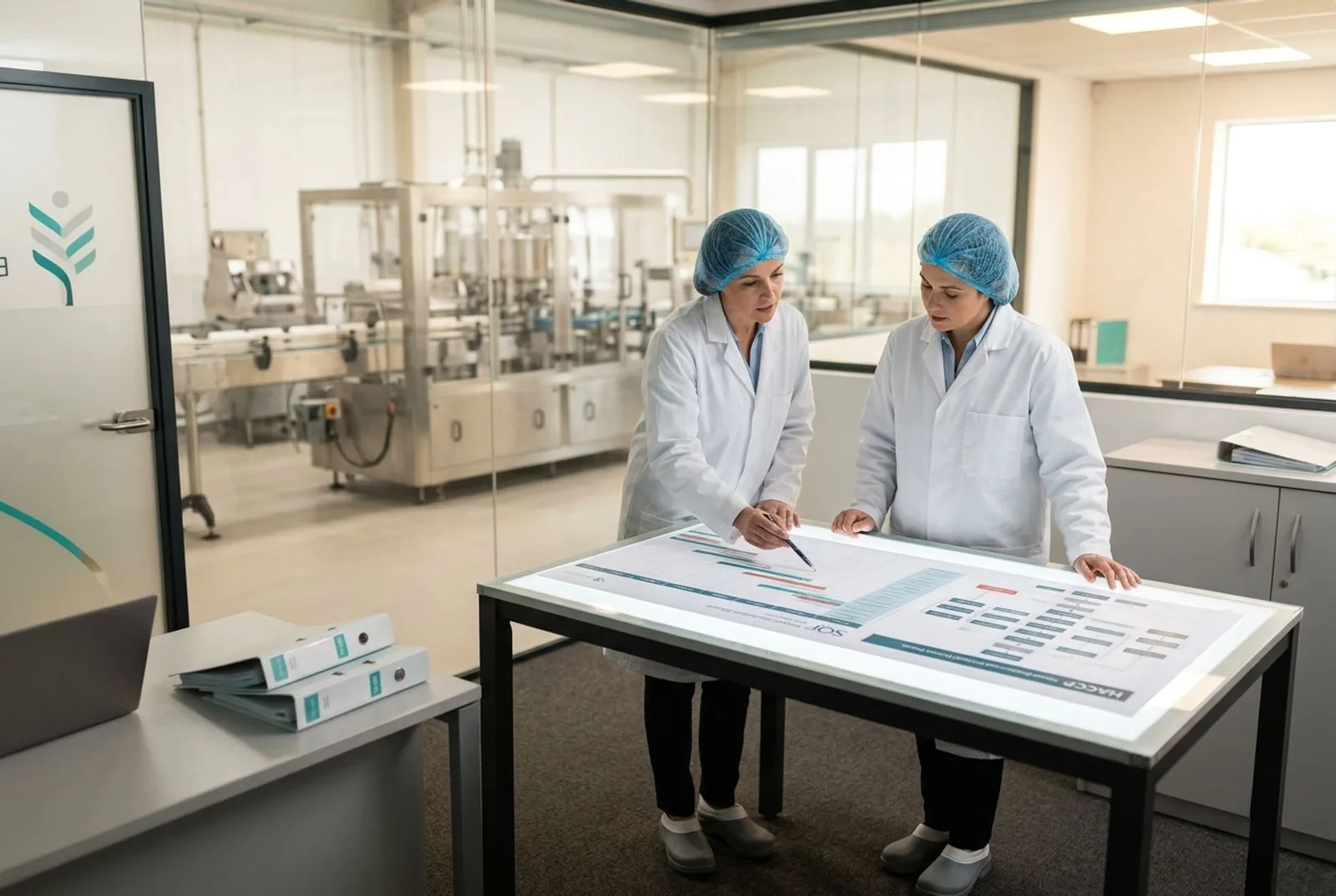
Our SQF Implementation Process
A structured four-step method designed to minimise disruption to production while building a food safety system your team can still run confidently after we leave.
Gap Assessment
An on-site walkthrough of your Cook County facility and a detailed review of your existing documentation against the SQF Code. You receive a findings report ranked by risk, plus a project timeline and scope you can budget against.
System Customisation
We build your food safety manual, HACCP validation, prerequisite programs, SOPs and record-keeping logs around your actual lines, shifts and product mix, and align them with your FDA, USDA FSIS or Illinois Department of Agriculture obligations so nothing is documented twice.
Implementation & Verification
Your team puts the system into operation while we verify it is holding on a normal production day: records completed as the work happens, monitoring inside defined limits, and floor practice matching the documented procedure. We work around your shift patterns rather than pulling crews off the line.
Mock Audit & Audit Day
A full mock audit dress rehearsal, close-out of remaining gaps, and on-call support during your certification audit so someone who knows your system is reachable the moment an auditor asks a difficult question.
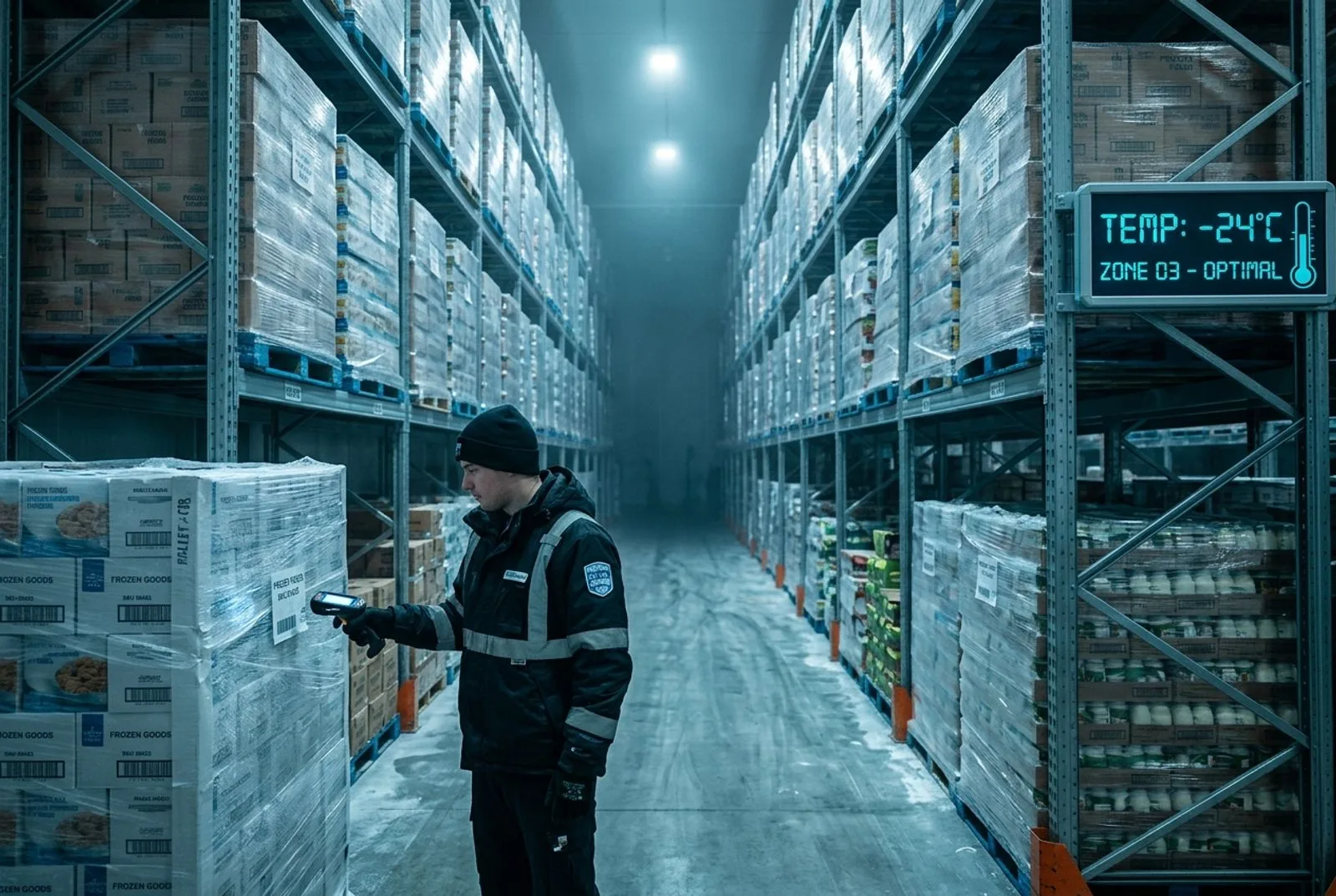
The Rail Hub, Cold Chain & Traceability
Chicago is the largest freight rail hub in North America, and the intermodal corridor running out through Joliet and Elwood moves an enormous share of the country's food. If your product passes through that network, your food safety system is being judged partly on how well you can account for what happened to it in transit and in storage.
That puts three things under pressure. The first is temperature control: refrigerated and frozen product moving between rail, truck and multiple storage nodes accumulates handover points, and each one needs monitoring evidence rather than an assumption. The second is sanitary transportation, where the obligations sit across carrier, shipper and receiver and the paperwork proving who was responsible for what is often the weakest link in an otherwise solid system. The third is traceability, where the direction of travel across the industry is toward faster, lot-level recall capability and richer records at each transfer point.
FSMA 204 and the Food Traceability Rule are the specific pressure here, and this is an area where published compliance dates have already shifted once. We treat any date-dependent claim as something to verify against the current FDA position at the time of your project rather than something to hard-code into your manual. What does not change is the underlying capability: if you handle a listed food, you need to know what came in, what went out, what it became, and be able to produce that in a usable format quickly.
For cold storage and third-party logistics operators the relevant standard is usually the SQF Food Safety Code for Storage and Distribution. For manufacturers shipping through that network, the traceability and supplier elements of the manufacturing code do the same work. Either way, we build the records so that a mock recall completes in hours, not days.
Which Food Safety Requirements Apply to Your Chicago Facility
Chicago facilities answer to more than one authority, and which one applies to you changes the shape of your food safety system. Use this as an orientation, then let us confirm the detail for your specific site and product mix, including which edition of the SQF Code, Edition 9 or Edition 10, your certification body will audit you against.
| Facility type | Primary oversight | Baseline legal requirement | Typical SQF code |
|---|---|---|---|
| Food manufacturer or processor (non-meat) | FDA, with the Illinois Department of Public Health at state level | FDA facility registration, preventive controls and a documented food safety plan | SQF Food Safety Code for Manufacturing |
| Meat or poultry processor (federal) | USDA FSIS, federal inspection | Grant of inspection, HACCP system under the federal meat and poultry inspection requirements, sanitation SOPs | SQF Food Safety Code for Manufacturing |
| Meat processor selling intrastate | Illinois Department of Agriculture, state meat and poultry inspection program | State grant of inspection under a program required to be at least equal to federal requirements | SQF Food Safety Code for Manufacturing |
| Bakery, snack or confectionery manufacturer | FDA, with IDPH at state level | Preventive controls, allergen controls and a food safety plan covering shared-line cross-contact | SQF Food Safety Code for Manufacturing |
| Co-packer and private label manufacturer | FDA and IDPH, plus your brand owner's own standards | Preventive controls, plus contractual food safety and allergen requirements from each brand owner | SQF Food Safety Code for Manufacturing |
| Cold storage, 3PL and distribution | FDA, sanitary transportation and storage provisions | Facility registration where applicable, temperature monitoring and traceability records | SQF Food Safety Code for Storage and Distribution |
| Food packaging manufacturer | FDA, food contact materials | Evidence that materials are suitable for food contact, preventive controls | SQF Food Safety Code for Food Packaging |
| Retail food facility or commissary kitchen | Chicago Department of Public Health within city limits, or your local health department elsewhere in Cook County | Health permit, certified food protection manager, routine inspection | SQF Fundamentals or Manufacturing |
“An auditor is not really reading your binder. They are checking whether the plant in front of them behaves like the plant your documents describe. Every hour spent making those two things match is worth ten spent rewriting procedures nobody on the floor has read.”
What Working With Us Actually Looks Like
No template binders, no theory, no consultant who has never run a sanitation shift. Here is what you get and how we work.
On-site, not over email
We come to your plant. Systems built from photographs and phone calls are the ones that fall apart when an auditor follows the product flow through the building and finds it does not match the diagram.
Documentation written for your floor
Your SOPs describe your equipment, your shifts and your product mix in language your supervisors use. If a procedure only makes sense to a consultant, it will not be followed once we leave.
One system, not three binders
Your SQF requirements, HACCP plan and FDA, USDA FSIS or Illinois Department of Agriculture obligations are mapped onto the same documents and the same daily routines, so your team completes a record once and it serves every obligation.
An honest timeline before you commit
The gap assessment produces a scope and schedule you can budget against, and a clear statement of what has to accumulate as records before an audit date is realistic for your site.
Auditor-perspective mock audits
We interview your line staff, pull records at random and run a live traceability exercise, then close out the findings while there is still time to fix root causes rather than paper over them.
Edition changes handled as controlled change
Moving from Edition 9 to Edition 10 is managed as a documented revision: map the differences, change only what genuinely changes, update the affected records, and brief the people whose daily tasks are affected. Your revision history shows the auditor exactly what moved and why.
Multilingual plant floors handled properly
Many Chicago production floors run in English, Spanish and Polish across different shifts. Procedures and training records only work if the people following them can read them, so we build documentation that reflects how your crews actually communicate.
Automated records where they matter
We digitise the logs that genuinely benefit from it — CCP monitoring, temperature capture with excursion alerts, corrective actions and lot movement — so entries are timestamped, searchable and impossible to backdate. Paper stays where paper works.
Is Your Chicago Facility Ready for an SQF Audit?
These are five things an auditor will verify within the first hour of walking into your plant. Toggle what is genuinely true for your site today for an honest read on where you stand.
Food Safety Consulting Built for the Chicago Food Industry
Chicago's food industry is not one thing, and a consultant who treats it as one will write you a system that fits nobody. The city carries more than a century of protein processing history in Back of the Yards and the corridor south and west of it, where USDA FSIS inspection is a daily presence and the question is how an SQF system layers cleanly onto an existing federally inspected HACCP program rather than duplicating it.
Then there is the bakery and confectionery cluster, which is genuinely one of the densest anywhere. These plants live and die on allergen management and shared-line changeover. Wheat, milk, egg, soy, peanut and tree nut frequently run through the same equipment in a single week, and sesame's addition to the major allergen list forced a great many Chicago bakeries to revisit labelling and cross-contact controls they had considered settled. An auditor will pull your changeover records and your validation of the cleaning step between allergen runs, and that is where points are most often lost.
Elk Grove Village and the industrial belt around O'Hare add a different profile again: contract manufacturing, ingredient blending, repacking and air-freight-adjacent distribution, where the customer base is national and every brand owner brings its own supplier standard on top of SQF. For these sites the work is usually consolidating half a dozen overlapping customer requirements into one system that satisfies all of them without maintaining six parallel document sets.
And across all of it sits a practical reality about staffing. Chicago production floors are frequently multilingual, shift patterns are long, and turnover in sanitation and line roles is real. A food safety system that depends on one exceptional individual remembering everything is fragile. We build documentation and training records that survive people leaving, because the alternative is a system that quietly degrades between audits and then fails one.
SQF Consulting for Practical, Plant-Floor Operations
Our clients are the people who have to pass the audit: QA managers, plant managers and owners who cannot halt production to build a certification program from scratch. We design around your sector and your constraints.
Chicago SQF Certification & Food Safety FAQs
Straight answers to the questions Cook County food manufacturers ask us most often, including what we do and do not provide.
How much does SQF certification cost in Chicago?
There are two separate costs and it helps to keep them apart. The certification body charges for the audit itself, priced on facility size, product risk and audit duration, and that fee goes to them rather than to us. Consulting is the second cost, and it depends entirely on your starting point: a site with a functioning HACCP plan and disciplined records needs far less work than one building from nothing. We quote a fixed scope after the gap assessment so you are not signing an open-ended hourly arrangement. Budget separately for any physical remediation the assessment uncovers, such as drainage, door seals or equipment replacement.
What is the difference between SQF Edition 9 and Edition 10?
Both are editions of the SQF Code published by SQFI. Edition 10 is the more recent revision, and the practical question for a certified site is not what changed in the abstract but what changes for your specific scope. We map your existing Edition 9 manual, prerequisite programs and records against the Edition 10 structure, identify exactly which documents and records are affected, and revise only those. Confirm with your certification body or SQFI in writing which edition your next audit will be conducted against before you begin any transition work, because that determines your timeline.
We are already certified to Edition 9. Do we have to start over?
No. That is the single most common misconception we encounter. An established Edition 9 system is an asset, not something to discard. The transition is handled as controlled change management: map the differences between your current system and Edition 10 requirements, isolate what genuinely has to change, revise those documents through your normal document control process with proper version history, update any affected records or forms, and brief the staff whose daily tasks are actually affected. An auditor will want to see the revision trail showing what changed and why, which is why doing this as a documented change rather than an informal rewrite matters.
Do you provide an SQF practitioner for our site?
No. We do not provide SQF practitioner support or act as your site's practitioner. That role belongs to someone employed at your facility who knows your operation day to day, and certification schemes expect it to sit with your own staff rather than an external consultant. What we do is build the system your team runs, write documentation in language your supervisors can actually follow, and make sure the people responsible understand how it works before we step back.
Do you run SQF training courses or issue certificates?
No. We do not deliver official SQF courses or issue training certificates. SQF training delivery and certification are tightly controlled by SQFI through their own approved channels, and we do not operate as an approved training provider. What we do provide is practical, hands-on guidance to your team as we build the system together, so the people running it understand the reasoning behind each procedure. If you need formal certificated training, we will point you toward the appropriate SQFI channels.
Can you handle our re-certification audit?
We do not provide re-certification services. Re-certification is conducted by your certification body on their own cycle, and your relationship for that sits directly with them. Where we can help is keeping your system in good order between audits through system verification and internal review, so that when your certification body arrives your records, monitoring and floor practice are aligned rather than reconstructed the week before.
How long does SQF certification take from a standing start?
For a Chicago facility with a functioning but undocumented operation, four to eight months to a certification audit is realistic. The binding constraint is usually not how fast documentation can be written but how long records must accumulate before there is evidence the system has genuinely been operating. Your certification body will expect monitoring logs, verification activities, an internal audit and a completed traceability exercise covering real production time. The gap assessment gives you a defensible date rather than an optimistic one.
Which SQF code applies to our facility?
It depends on what you do. Manufacturers and processors generally fall under the SQF Food Safety Code for Manufacturing. Cold storage, third-party logistics and distribution operations use the Storage and Distribution code. Packaging manufacturers have their own code, and smaller or less complex sites sometimes begin with SQF Fundamentals as a stepping stone rather than going straight to full certification. If you run several activities on one site, scope definition becomes important, and getting it wrong is an expensive way to discover the problem on audit day.
Do you work with USDA FSIS inspected plants?
Yes, and it is common work in Chicago given the concentration of protein processing here. A federally inspected plant already operates a HACCP system and sanitation SOPs under its grant of inspection, and the goal is to layer SQF onto that cleanly rather than build a parallel structure. We also work with plants under the Illinois Department of Agriculture state inspection program, which operates a cooperative program required to be at least equal to federal requirements. Either way, one hazard analysis should serve both your regulatory obligation and your certification scope.
Our buyer says we need GFSI certification. Is that the same as SQF?
Not quite, and the distinction matters when you are choosing. GFSI is a benchmarking organisation rather than a certification scheme in its own right, and it recognises several schemes including SQF, BRCGS, FSSC 22000 and IFS. A buyer asking for GFSI certification will usually accept any recognised scheme. SQF tends to be the most common choice in the United States, but check whether your buyer has specified a particular scheme before committing, because switching later is disruptive and there is rarely a good reason to do it twice.
What happens if we fail the audit or receive a major non-conformance?
A non-conformance is not the end of the process. Your certification body will set out what is required and the window you have to respond, and that window varies by scheme, by severity and by certification body, so take the timeframe from them in writing rather than relying on a figure you read somewhere. What matters is the quality of the response: a genuine root cause analysis, a corrective action that addresses the cause rather than the symptom, and evidence the fix is holding. We help clients build responses that close out cleanly instead of generating a repeat finding at the next audit.
Do you travel to sites outside the city?
Yes. We cover Chicago and the surrounding Cook County industrial areas, and we regularly work with sites throughout the collar counties, including DuPage, Lake, Will, Kane and McHenry, as well as northwest Indiana and southern Wisconsin. Most engagements combine on-site visits for assessment, verification and mock audits with remote work for documentation development, which keeps costs sensible without losing the plant-floor understanding that makes a system work.
Working With a Chicago SQF Consultant: Coverage & Logistics
We work on-site across Chicago and the wider metropolitan area: the industrial corridors of Bedford Park, Cicero, Melrose Park and Franklin Park, the protein and food processing belt south and west of the city, the manufacturing and distribution concentration around Elk Grove Village and O'Hare, and the intermodal and warehousing corridor running down through Bolingbrook, Romeoville and Joliet. We also travel regularly to sites in DuPage, Lake, Will, Kane and McHenry counties, into northwest Indiana, and north into southern Wisconsin.
A typical engagement mixes on-site and remote work deliberately. The gap assessment, verification visits and mock audit have to happen in your building, because the entire point is to see what actually occurs on your floor rather than what your documents claim occurs. Documentation development, review cycles and preparation work happen remotely, which keeps your costs down and avoids consultants sitting in your conference room billing for writing time.
We schedule around production rather than the other way round. For sites running multiple shifts, that often means being on the floor during second shift or early morning sanitation, because that is when the practices an auditor will eventually observe are genuinely visible. Daytime-only consulting tends to produce systems that describe the best-behaved shift and nothing else.
One thing worth stating plainly, because it affects how you plan. We build the system and prepare your team for the audit. We do not audit you and we do not certify you. Certification is conducted by an independent certification body accredited for the SQF program, and that separation is a feature of the scheme rather than an inconvenience: a consultant who also certified their own work would render the certificate worthless. We will happily help you understand what to expect from the process, and we will be reachable during your audit, but the certificate comes from them.
Partner With a Trusted Chicago SQF Consultant
Whether you are pursuing certification for the first time because a buyer has asked for it, or strengthening a system that has already been through an audit, we build practical programs your team can maintain. Tell us what your buyer or auditor is asking for and we will map the path. The first consultation is free.