
SQF CERTIFICATION CONSULTING · GFSI-BENCHMARKED · LOS ANGELES & SOUTHERN CALIFORNIA
Food Safety & SQF Consultant in Los Angeles
Work with a certified SQF consultant in Los Angeles to build a food safety system that holds up on audit day and on an ordinary Tuesday. We deliver HACCP-based food safety plans, SQF documentation, supplier and traceability programs and full mock audits for food manufacturers, co-packers, produce handlers, import distributors and cold storage operators across LA County.
Why Los Angeles Food Businesses Are Suddenly Being Asked for SQF
Most facilities we meet in Los Angeles did not go looking for SQF certification. It arrived in an email from a buyer. A regional grocery chain updates its supplier approval policy, a national brand decides every co-packer in its network needs a GFSI-benchmarked certificate, or a distributor tells you that your existing third-party audit will no longer be accepted after the next purchasing cycle. The deadline is rarely generous, and it almost never accounts for how long a credible food safety system actually takes to build.
Los Angeles County is the largest food manufacturing cluster in the United States, and that density is exactly why the pressure lands here first. The industrial corridors through Vernon, Commerce, City of Industry and Santa Fe Springs hold an extraordinary concentration of protein processors, bakeries, tortilla and snack producers, beverage co-packers and private label manufacturers. Add the produce handling operations around the Los Angeles Wholesale Produce Market, the cold storage and import distribution built around the Port of Los Angeles and the Port of Long Beach, and you have a supply base that national buyers lean on heavily. When those buyers tighten supplier requirements, thousands of LA facilities feel it at once.
The second driver is that SQF certification is a commercial requirement, not a legal one, and the two get confused constantly. Your legal baseline in California is separate: a processed food registration from the CDPH Food and Drug Branch for most manufacturers, a Los Angeles County Department of Public Health permit for certain operations, or a USDA FSIS grant of inspection if you process meat or poultry. None of those obligations disappear because you hold an SQF certificate, and none of them satisfy a buyer asking for one. They run in parallel, and a well-built system serves both at once rather than duplicating the work.
What makes the timing genuinely difficult right now is that the SQF Code itself is in transition. Facilities are being certified against SQF Edition 9 while Edition 10 moves into effect, which means a system built carelessly today can need rework within a single audit cycle. That is avoidable. Build the structure correctly the first time and the move from Edition 9 to Edition 10 becomes a managed revision rather than a rebuild — which is precisely how we scope every engagement in Los Angeles.
SQF Certification & Food Safety Consulting in Los Angeles
Whether a retail buyer has just made certification a condition of your next purchase order, or an audit date is approaching faster than your team can prepare, we take the documentation and audit preparation off your plate without stopping production. Every engagement is scoped from a site visit rather than a template, and built to the edition of the SQF Code your certification body will audit you against, whether that is Edition 9 or Edition 10.
SQF Gap Assessment
An on-site walkthrough of your facility and a line-by-line review of your existing paperwork against the SQF Code, scored to the edition your certification body will audit you against. We rank every finding by risk and give you a realistic timeline and budget you can take to ownership before you commit to an audit date.
Book a gap callSYSTEM BUILDSQF Documentation & SOPs
We write your food safety manual, SOPs, prerequisite programs, specifications and record-keeping logs around your actual equipment, shift patterns and product mix, structured so an Edition 9 system can be carried forward to Edition 10 without starting again. The test we apply is whether a supervisor can run it on a busy afternoon without calling the QA office.
View serviceHACCP & PREVENTIVE CONTROLSHACCP Plans & Preventive Controls
A documented, validated HACCP plan built around your real biological, chemical, physical and allergen hazards, with critical control points you can defend with data. We align it with the preventive controls your FDA or USDA FSIS obligations already require, so one hazard analysis serves every purpose instead of three overlapping documents.
View serviceAUDIT PREPMock & Internal SQF Audits
A full dress rehearsal of audit day, from the opening meeting through the facility walkthrough and records review. We interview your line staff the way an auditor will, run a traceability exercise against a real lot code, surface the findings that cost points, and close them while there is still time to fix them properly.
View serviceVERIFICATIONSystem Verification & Internal Review
Once the system is live, we verify it is actually being followed: records completed at the time of the work rather than reconstructed, monitoring within defined limits, and floor practice matching the documented procedure. You get a written findings list with enough runway to correct anything that has drifted before an auditor sees it.
View serviceEDITION 9 TO 10Edition 9 to Edition 10 Transition
If you already hold certification to Edition 9, you do not need a new system. We map your existing manual, prerequisite programs and records against the Edition 10 structure, isolate what genuinely has to change, revise only those documents, and brief the people whose daily tasks are affected. Managed as a controlled change, with the revision history your auditor will ask to see.
View serviceHow Long SQF Certification Really Takes
The honest range for a first-time site is three to nine months, and where you land inside it depends almost entirely on what already exists when we walk in. A plant already running a working HACCP plan with disciplined daily records can move quickly, because the foundation is there and the work is structural rather than cultural. A plant operating on experienced people and informal habit needs longer — not because the documentation takes longer to write, but because the SQF Code expects evidence that your system has been operating over time, and that history cannot be compressed or backdated.
That last point catches more Los Angeles facilities than any other. Buyers hand down a deadline of sixty or ninety days, and the assumption is that certification is a paperwork exercise that can be sprinted. It is not. Your auditor will ask to see monitoring records, verification activities, internal audit results and corrective actions that demonstrate the system has been genuinely lived in. If your documentation was finalised three weeks before the audit, the records will say so, and that is a difficult conversation to recover from.
The practical response is to separate what can be accelerated from what cannot. Documentation development, hazard analysis, prerequisite program design and supplier approval paperwork can all be compressed with focused effort. Record history cannot. So we sequence the work to get your system operating on the floor as early as possible, even while documents are still being refined, which starts the clock on the evidence your auditor needs. We also help you have a realistic conversation with your buyer, because most will accept a credible dated plan showing a certification target far more readily than a missed deadline.
A gap assessment is what turns this from guesswork into a schedule. After a day on your site we can tell you which of those months apply to you, what has to happen in which order, and what it will cost — before you commit to an audit date with your certification body.
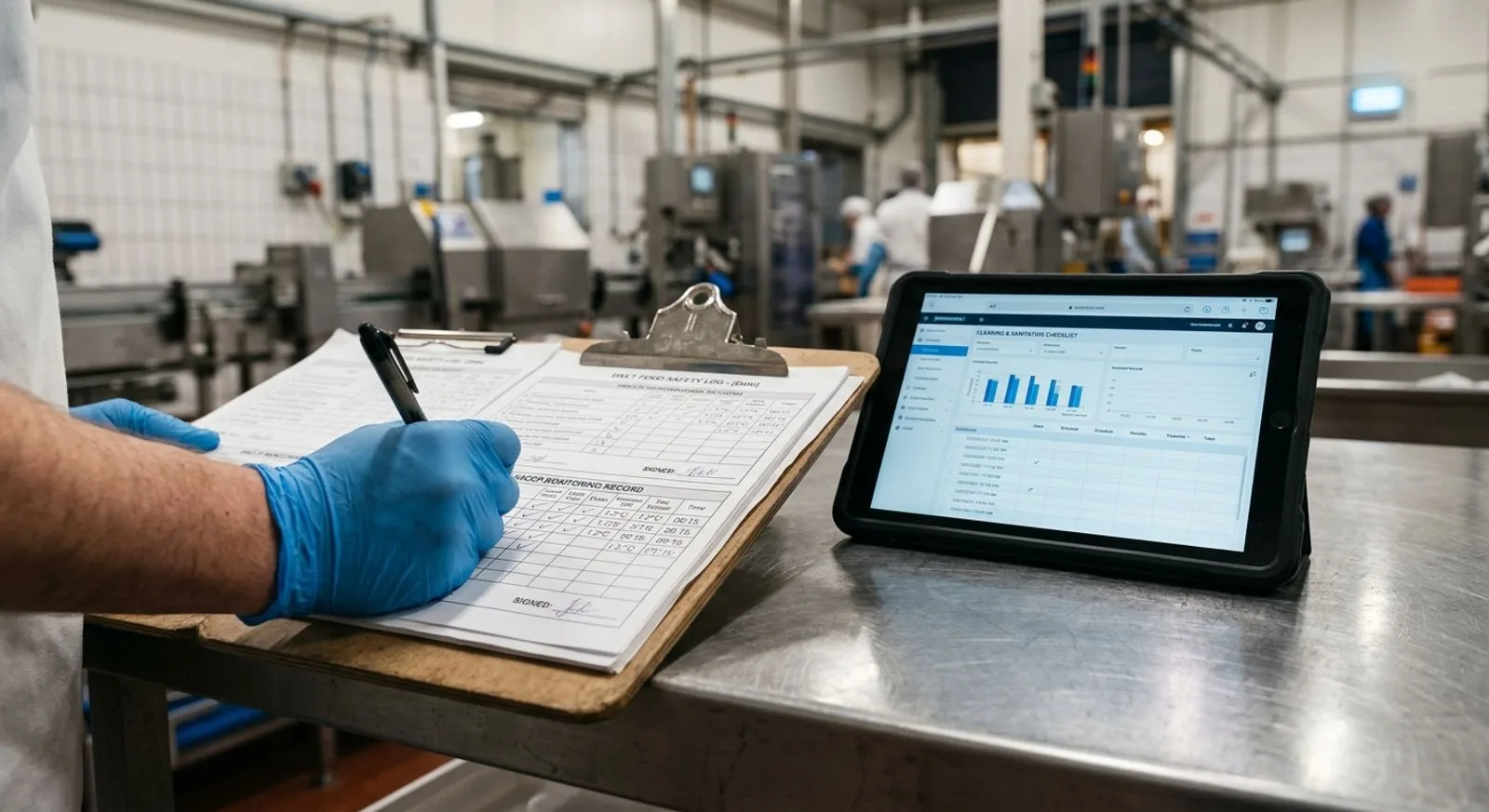
Our SQF Implementation Process
A structured four-step method designed to minimise disruption to production while building a food safety system your team can still run confidently after we leave.
Gap Assessment
An on-site walkthrough of your Los Angeles County facility and a detailed review of your existing documentation against the SQF Code. You receive a findings report ranked by risk, plus a project timeline and scope you can budget against.
System Customisation
We build your food safety manual, HACCP validation, prerequisite programs, SOPs and record-keeping logs around your actual lines, shifts and product mix, and align them with your FDA or USDA obligations so nothing is documented twice.
Implementation & Verification
Your team puts the system into operation while we verify it is holding on a normal production day: records completed as the work happens, monitoring inside defined limits, and floor practice matching the documented procedure. We work around your shift patterns rather than pulling crews off the line.
Mock Audit & Audit Day
A full mock audit dress rehearsal, close-out of remaining gaps, and on-call support during your certification audit so someone who knows your system is reachable the moment an auditor asks a difficult question.
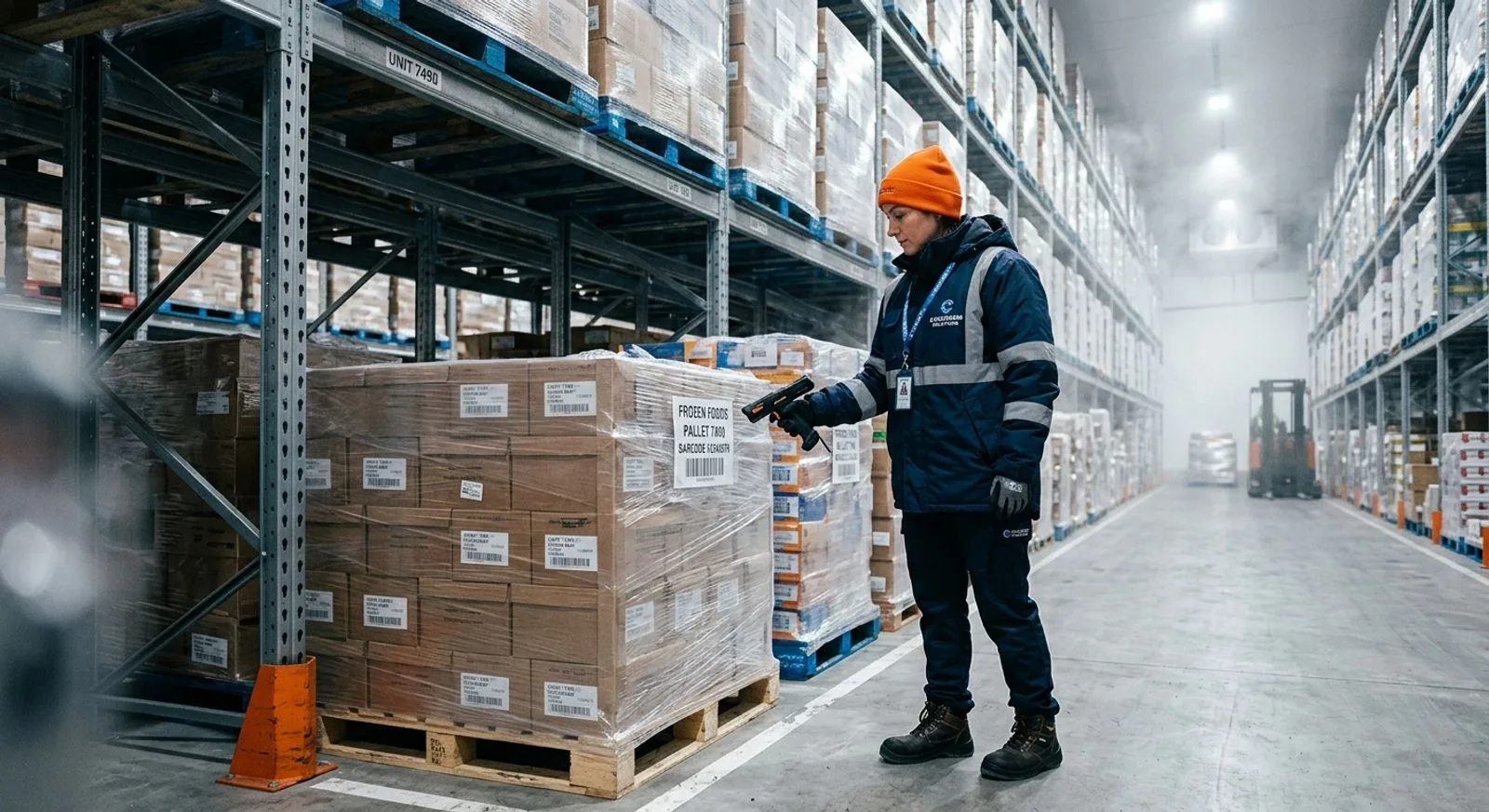
The Ports, Cold Chain & Imported Ingredients
The San Pedro Bay port complex — the Port of Los Angeles and the Port of Long Beach together — is the largest container gateway in the United States, and it shapes the food safety profile of an enormous number of LA County businesses. If you import ingredients or finished product, or if you store and redistribute goods that arrive through those terminals, your system has to answer questions that a purely domestic manufacturer never faces.
The first is supplier approval with genuine distance in the chain. The SQF Code expects you to demonstrate that your raw materials come from approved sources against agreed specifications, and that you verify this rather than assume it. When a supplier is overseas and reached through a broker or trading company, an auditor will want to see how you established that approval, what evidence you hold, what you do when a shipment arrives from an unapproved source under deadline pressure, and how that exception was documented and closed. Facilities routinely have the policy written and no evidence of it operating.
The second is FSVP. If your business acts as the importer of record, the Foreign Supplier Verification Program places obligations on you directly, and your SQF supplier approval program should be built to carry that weight rather than sitting alongside it as a separate binder. Where you are the domestic supplier rather than the importer, your US customers will ask you for hazard documentation to satisfy their own FSVP duties — and how quickly you can produce it affects whether you keep the account.
The third is traceability under FSMA Section 204. If you handle foods on the FDA Food Traceability List, the record requirements are specific about the key data elements you capture at defined critical tracking events. For high-throughput cold storage and distribution operations in Vernon, Commerce and the Long Beach corridor, that usually means lot coding and scanning discipline at receiving and shipping, not a spreadsheet reconstructed after the fact. We build the lot coding and record structure so one traceability exercise satisfies your SQF requirement, your customer's expectations and your FSMA 204 obligations together.
Which Food Safety Requirements Apply to Your Los Angeles Facility
Los Angeles facilities answer to more than one authority, and which one applies to you changes the shape of your food safety system. Use this as an orientation, then let us confirm the detail for your specific site and product mix, including which edition of the SQF Code, Edition 9 or Edition 10, your certification body will audit you against.
| Facility type | Primary oversight | Baseline legal requirement | Typical SQF code |
|---|---|---|---|
| Food manufacturer or processor (non-meat) | FDA, with CDPH Food and Drug Branch at state level | Processed food registration, FDA facility registration, preventive controls and a food safety plan | SQF Food Safety Code for Manufacturing |
| Meat or poultry processor | USDA FSIS, federal inspection | Grant of inspection, HACCP system under the federal meat and poultry inspection requirements, sanitation SOPs | SQF Food Safety Code for Manufacturing |
| Co-packer and private label manufacturer | FDA and CDPH, plus your brand owner's own standards | Preventive controls, plus contractual food safety and allergen requirements from each brand owner | SQF Food Safety Code for Manufacturing |
| Produce handler, repacker or fresh-cut operation | FDA, with CDFA involvement at grower level | Produce safety requirements, water and worker hygiene controls, lot-level traceability | SQF Primary Production or Manufacturing |
| Cold storage, 3PL and distribution | FDA, sanitary transportation and storage provisions | Facility registration where applicable, temperature monitoring and traceability records | SQF Food Safety Code for Storage and Distribution |
| Importer or import distributor | FDA, via Foreign Supplier Verification Program obligations | FSVP records, foreign supplier verification, hazard documentation for each imported food | SQF Storage and Distribution plus FSVP documentation |
| Food packaging manufacturer | FDA, food contact materials | Evidence that materials are suitable for food contact, preventive controls | SQF Food Safety Code for Food Packaging |
| Retail food facility or commissary kitchen | Los Angeles County Department of Public Health, under the California Retail Food Code | Health permit, certified food protection manager, routine county inspection | SQF Fundamentals or Manufacturing |
“An auditor is not really reading your binder. They are checking whether the plant in front of them behaves like the plant your documents describe. Every hour spent making those two things match is worth ten spent rewriting procedures nobody on the floor has read.”
What Working With Us Actually Looks Like
No template binders, no theory, no consultant who has never run a sanitation shift. Here is what you get and how we work.
On-site, not over email
We come to your plant. Systems built from photographs and phone calls are the ones that fall apart when an auditor follows the product flow through the building and finds it does not match the diagram.
Documentation written for your floor
Your SOPs describe your equipment, your shifts and your product mix in language your supervisors use. If a procedure only makes sense to a consultant, it will not be followed once we leave.
One system, not three binders
Your SQF requirements, HACCP plan and FDA or USDA obligations are mapped onto the same documents and the same daily routines, so your team completes a record once and it serves every obligation.
An honest timeline before you commit
The gap assessment produces a scope and schedule you can budget against, and a clear statement of what has to accumulate as records before an audit date is realistic for your site.
Auditor-perspective mock audits
We interview your line staff, pull records at random and run a live traceability exercise, then close out the findings while there is still time to fix root causes rather than paper over them.
Edition changes handled as controlled change
Moving from Edition 9 to Edition 10 is managed as a documented revision: map the differences, change only what genuinely changes, update the affected records, and brief the people whose daily tasks are affected. Your revision history shows the auditor exactly what moved and why.
Straight answers about scope
If your buyer specifies a scheme we are not the right partner for, or your site needs work we do not provide, we will say so on the first call rather than three months into an engagement.
Automated records where they matter
We digitise the logs that genuinely benefit from it — CCP monitoring, temperature capture with excursion alerts, corrective actions and lot movement — so entries are timestamped, searchable and impossible to backdate. Paper stays where paper works.
Is Your Los Angeles Facility Ready for an SQF Audit?
These are five things an auditor will verify within the first hour of walking into your plant. Toggle what is genuinely true for your site today for an honest read on where you stand.
Food Safety Consulting Built for the Los Angeles Food Industry
Los Angeles does not have one food industry. It has a dozen overlapping ones, and a consultant who treats them identically will build you a system that fits none of them properly.
The protein corridor through Vernon and Commerce runs on tight sanitation windows and USDA FSIS oversight, where the interaction between your federal inspection obligations and your SQF system has to be worked out deliberately rather than left to collide. Get it right and your sanitation SOPs, pre-operational inspection records and HACCP monitoring serve both masters from one set of documents. Get it wrong and your QA team maintains two parallel paper trails that contradict each other under questioning.
The co-packing and private label sector faces a different problem entirely. When you run six brands across three lines, your allergen management, changeover validation and label control programs carry risk that a single-brand manufacturer never encounters. Every brand owner arrives with their own supplier standard, their own specification format and their own audit expectations, layered on top of the SQF Code. The work is building one system disciplined enough to satisfy all of them without maintaining a separate program per customer.
The Hispanic and Asian food manufacturers that give Los Angeles much of its character — tortilla producers, sauce and salsa manufacturers, noodle and dumpling plants, specialty bakeries — are frequently second or third generation businesses with deep technical knowledge held by long-serving staff and very little of it written down. The certification challenge is rarely competence. It is translating decades of genuine expertise into documented, verifiable procedure without insulting the people who built the business or replacing what already works with something worse.
Then there is scale. A twelve-person commissary in the San Fernando Valley and a 300,000 square foot distribution centre in Santa Fe Springs both need real systems, but the appropriate weight of documentation is entirely different. For smaller sites, SQF Fundamentals often provides a more sensible entry point that many buyers will accept as a stepping stone. Recommending the full Food Safety Code to a site that would be better served by Fundamentals is an expensive mistake, and we will tell you which applies on the first call.
Across all of them, one constraint holds: none of these businesses can stop producing while they get certified. Every system we build is designed around that reality.
SQF Consulting for Practical, Plant-Floor Operations
Our clients are the people who have to pass the audit: QA managers, plant managers and owners who cannot halt production to build a certification program from scratch. We design around your sector and your constraints.
Los Angeles SQF Certification & Food Safety FAQs
Straight answers to the questions LA County facilities ask us most often, from scope and cost to what happens when findings land.
What does an SQF consultant in Los Angeles actually do?
We build and validate the food safety management system your certification audit will be measured against. In practice that means a gap assessment of your current site, a documented and validated HACCP plan, prerequisite programs and SOPs written around your equipment and shifts, on-site verification that the system is being followed, and a full mock audit before your certification body arrives. Your certification body performs the audit itself and issues the certificate, and we prepare your facility and your documentation for it.
How long does SQF certification take for a Los Angeles facility?
For most first-time sites the honest range is three to nine months, and where you land depends on what already exists. A plant with a working HACCP plan and disciplined records moves quickly. A plant starting from informal practice needs longer, because the SQF Code requires evidence that your system has been operating over time, and that history cannot be compressed. A gap assessment gives you a real timeline for your site rather than a guess.
What does SQF consulting cost?
Consulting fees vary with facility size, product risk, the number of production lines and how much of the work your internal team can absorb. Separate from consulting, you pay your certification body directly for the audit itself, and that fee scales with audit duration and site complexity. We scope accurately after a gap assessment rather than quoting blind over the phone.
Is SQF certification a legal requirement in California?
No. Your legal baseline is federal and state: FDA facility registration and preventive controls for most manufacturers, a processed food registration from the CDPH Food and Drug Branch, a USDA FSIS grant of inspection if you process meat or poultry, or a Los Angeles County Department of Public Health permit for retail and commissary operations. SQF certification is a commercial requirement driven by your buyers. It exists so a retailer or distributor can accept a GFSI-benchmarked certificate instead of auditing every supplier themselves.
Which SQF code applies to my facility?
It depends on what you do. Manufacturers and processors fall under the SQF Food Safety Code for Manufacturing. Warehouses, 3PLs and distributors use the Food Safety Code for Storage and Distribution. Packaging converters use the Food Safety Code for Food Packaging, and growing and harvesting operations use Primary Production. We confirm the correct code and scope during the gap assessment, because getting it wrong is an expensive way to start.
Do you work to SQF Edition 9 or SQF Edition 10?
Both. Which edition your audit is conducted against is set by your certification body and the date your audit falls on, so confirming it is the first thing we do before writing a line of documentation. If you are already certified to Edition 9, we map the manual, prerequisite programs and records you already run onto the Edition 10 structure and isolate what genuinely has to change, rather than rewriting a system that is working. If you are certifying for the first time, we build to the edition your certification body confirms will apply on your audit date. For the current transition timing, ask your certification body or SQFI to confirm it in writing, because that schedule is theirs to set.
How should we manage the change from Edition 9 to Edition 10?
Treat it as controlled change management, not a rebuild. The sequence that works is: confirm with your certification body which edition applies to your next audit, map your existing documented system against the new structure, identify the specific requirements that have genuinely changed for your scope, revise only those documents and records, brief the staff whose daily tasks are affected, and keep the revision history that shows what changed and when. An auditor will want to see that the transition was deliberate and documented rather than a quiet overwrite. Because the detail of what changes depends on your scope and code, we verify current requirements against SQFI source documents at the start of every transition project.
We are a small operation. Is SQF realistic for us?
Often yes, and the entry point matters. SQF Fundamentals is designed for smaller and less complex sites and gives you a structured, achievable path that many buyers will accept as a stepping stone toward full Food Safety Code certification. We will tell you honestly on the first call whether Fundamentals or the full code is the right starting point for your site and your customer's requirements.
What happens if we receive non-conformances at our audit?
Receiving some is common rather than catastrophic, and most are correctable within a defined response window set by your certification body. What matters is the quality of your response: a genuine root cause analysis, a fix that addresses the cause rather than the symptom, and evidence that the fix is holding. We help facilities build that evidence package and submit it inside the window your certification body has set.
We import ingredients through the Port of Los Angeles. Does SQF cover our FDA obligations?
Not automatically, though a well-built system does most of the work. If your business is the importer of record, the Foreign Supplier Verification Program places obligations on you directly, and your SQF supplier approval program should be built to carry them rather than duplicating them. If you handle foods on the FDA Food Traceability List, FSMA Section 204 record requirements apply on top. We build supplier approval, lot coding and record systems so one set of evidence satisfies your SQF requirements and your FDA obligations together.
Do you provide food safety training for our staff?
We do not deliver training courses or issue certificates. We build and verify the food safety management system itself: the gap assessment, HACCP plan, prerequisite programs, SOPs, records and mock audit. Where the SQF Code requires documented competency for your team, we specify what that training has to cover and what evidence your auditor will expect, and you deliver it in-house or through a dedicated training provider. Keeping the two separate also keeps our verification of your system genuinely independent.
Do you work on-site across Los Angeles County?
Yes. We work on-site throughout LA County including the industrial corridors in Vernon, Commerce, City of Industry and Santa Fe Springs, across the San Fernando Valley, the South Bay, Long Beach and the port area, and out through the San Gabriel Valley. We also support facilities in Orange County, the Inland Empire and Ventura County, combining on-site visits for assessment, verification and mock audits with remote work for documentation development.
Working With a Los Angeles SQF Consultant: Coverage & Logistics
Los Angeles geography is a real project constraint, not a footnote. A site visit in Vernon and a site visit in Valencia are not interchangeable, and anyone who has tried to cross the county at four in the afternoon knows why. We schedule around it deliberately.
Our on-site work covers the industrial corridors through Vernon, Commerce, City of Industry, Santa Fe Springs, Compton and Carson, the port and logistics zone across Long Beach, Wilmington and Carson, the San Fernando Valley through Pacoima, Sun Valley and Van Nuys, the San Gabriel Valley, and out to Santa Clarita and the Antelope Valley. We regularly support facilities beyond the county line in Orange County, the Inland Empire around Ontario and Riverside, and Ventura County.
The work splits sensibly between on-site and remote. Gap assessments, verification visits, traceability exercises and mock audits have to happen in your building, because the entire point is comparing what your documents claim against what your plant actually does. Documentation development, hazard analysis review, supplier program design and corrective action support work perfectly well remotely, which keeps your costs down and avoids a consultant sitting in your conference room doing work they could do anywhere.
We also schedule around production rather than against it. If your sanitation crew works overnight and the pre-operational inspection happens at five in the morning, that is when we need to see it. If your changeovers are the risk point in your allergen program, we come in for a changeover. Systems verified only during a quiet Tuesday morning are systems that have never actually been tested.
One engagement note worth stating plainly: we build and verify your food safety management system, and your certification body conducts the audit and issues the certificate. Those roles stay separate. That separation is what keeps our verification of your system meaningful, and it is what an auditor expects to see.
Partner With a Trusted Los Angeles SQF Consultant
Whether you are pursuing certification for the first time because a buyer has asked for it, or strengthening a system that has already been through an audit, we build practical programs your team can maintain. Tell us what your buyer or auditor is asking for and we will map the path. The first consultation is free.