

SQF CERTIFICATION CONSULTING · GFSI-BENCHMARKED · VANCOUVER & BRITISH COLUMBIA
Food Safety & SQF Consultant in Vancouver
Work with a certified SQF consultant in Vancouver to build a food safety system that holds up on audit day and on an ordinary Tuesday. We deliver HACCP-based food safety plans, Safe Food for Canadians preventive control plans, SQF documentation and full mock audits for food manufacturers, seafood processors, produce packers, cold storage and distribution facilities across Metro Vancouver and the Fraser Valley.
Why Vancouver Food Businesses Are Suddenly Being Asked for SQF
Almost nobody in British Columbia pursues SQF certification because they woke up wanting it. The call usually comes from a category buyer at a national grocery chain, a foodservice distributor consolidating its supplier list, or a US importer who has just been told by its own auditor that every foreign supplier needs a GFSI-benchmarked certificate on file. The deadline attached to that request is rarely generous, and it lands on a quality team already running production, managing complaints and keeping up with CFIA paperwork.
The friction is that a Safe Food for Canadians licence and a working preventive control plan, which is what the law actually requires of you, are not the same thing as an SQF certificate. Federal licensing verifies that you are legally entitled to manufacture, process, store or export food. SQF certification demonstrates something broader to a commercial buyer: that your food safety management system is documented, validated, verified and reviewed by senior management, and that the culture around it survives staff turnover and a bad week. Facilities discover the difference when an auditor asks for validation evidence, verification records, internal audit reports and a management review that regulatory inspection never demanded.
The second source of friction is more mundane and more expensive. In most plants we walk into, the documentation is not wrong, it is disconnected. Someone downloaded a template or inherited a binder that describes an idealised facility, the floor runs a perfectly sensible but different way, and an experienced auditor finds the gap between the two within the first two hours. Non-conformances written against that gap are not really about food safety. They are about a system nobody on the floor recognises as theirs.
Edition 9, Edition 10 and Which One Your Audit Uses
One thing worth settling early: the SQF Code is revised periodically, and the edition your audit is conducted against is determined by your certification body and your audit date, not by preference. We work to both Edition 9 and Edition 10. For a site already certified under Edition 9, the practical task is mapping the manual, prerequisite programs and records you already run onto the Edition 10 structure, then isolating what genuinely has to change, which is almost always far less than a wholesale rewrite implies. For a first-time site, we build against the edition your certification body confirms will apply on your audit date, so you are not preparing to a version that has moved on before the auditor arrives. Confirm the transition timing directly with your certification body or SQFI, because that schedule sits with them and it is not a detail you want second-hand.
Our work is to close the gap between the binder and the building before an auditor is standing in your receiving bay. That means writing the system around what your people genuinely do, tightening the practices that need tightening, and making sure every record your team fills in serves your SQF obligations, your preventive control plan and your customers' specifications at the same time, rather than three times over.
SQF Certification & Food Safety Consulting in Vancouver
Whether a retail buyer has just made certification a condition of your next purchase order, or an audit date is approaching faster than your team can prepare, we take the documentation and audit preparation off your plate without stopping production. Every engagement is scoped from a site visit rather than a template, and built to the edition of the SQF Code your certification body will audit you against, whether that is Edition 9 or Edition 10.
SQF Gap Assessment
An on-site walkthrough of your facility and a line-by-line review of your existing paperwork against the SQF Code, scored to the edition your certification body will audit you against. We rank every finding by risk and give you a realistic timeline and budget you can take to ownership before you commit to an audit date.
Book a gap callSYSTEM BUILDSQF Documentation & SOPs
We write your food safety manual, SOPs, prerequisite programs, specifications and record-keeping logs around your actual equipment, shift patterns and product mix, structured so an Edition 9 system can be carried forward to Edition 10 without starting again. The test we apply is whether a supervisor can run it on a busy afternoon without calling the QA office.
View serviceHACCP & SFCRHACCP Plans & Preventive Control Plans
A documented, validated HACCP plan built around your real biological, chemical, physical and allergen hazards, with critical control points you can defend with data. We align it with the written preventive control plan the Safe Food for Canadians Regulations already require, so one hazard analysis serves both purposes.
View serviceAUDIT PREPMock & Internal SQF Audits
A full dress rehearsal of audit day, from the opening meeting through the facility walkthrough and records review. We interview your line staff the way an auditor will, run a traceability exercise against a real lot code, surface the findings that cost points, and close them while there is still time to fix them properly.
View serviceVERIFICATIONSystem Verification & Internal Review
Once the system is live, we verify it is actually being followed: records completed at the time of the work rather than reconstructed, monitoring within defined limits, and floor practice matching the documented procedure. You get a written findings list with enough runway to correct anything that has drifted before an auditor sees it.
View serviceCORRECTIVE ACTIONCorrective Action Support
If your audit has already happened and non-conformances landed, we help you run genuine root cause analysis, build corrective and preventive actions that address the cause rather than the symptom, and assemble the evidence package your certification body expects inside its response window. Speed matters, and so does getting it right the first time.
Get help nowHow Long SQF Certification Really Takes
The honest range for a first-time site is three to nine months, and where you land inside that range depends almost entirely on what already exists when we arrive. A plant with a functioning HACCP plan, disciplined records and an experienced QA lead can move through the roadmap quickly. A plant operating on informal practice and institutional memory needs longer, because the SQF Code does not just ask whether your system exists, it asks for evidence that it has been operating over time.
That last point catches more BC facilities than any other. You cannot compress a required period of records into a fortnight of preparation. Internal audits, verification activities, environmental monitoring results, sanitation verification and management review all need history behind them before an auditor will accept them. This is the single most common reason a rushed certification attempt slips, and it is the reason we push hard for a gap assessment before anyone books an audit date.
The four stages in the roadmap alongside are deliberately sequential. Assessment establishes the truth about your site and produces a timeline you can budget against. The system build turns that into documentation matched to your equipment and product mix. Implementation moves the system off the page and onto the floor, where your team runs it day to day and we verify that practice and records line up with what is written. The mock audit proves it holds under pressure, with enough runway left to fix whatever it exposes.
What we will not do is quote you a timeline over the phone before seeing your facility. Any consultant who does is guessing, and the cost of that guess usually shows up as a rescheduled audit and a buyer conversation you would rather not have.
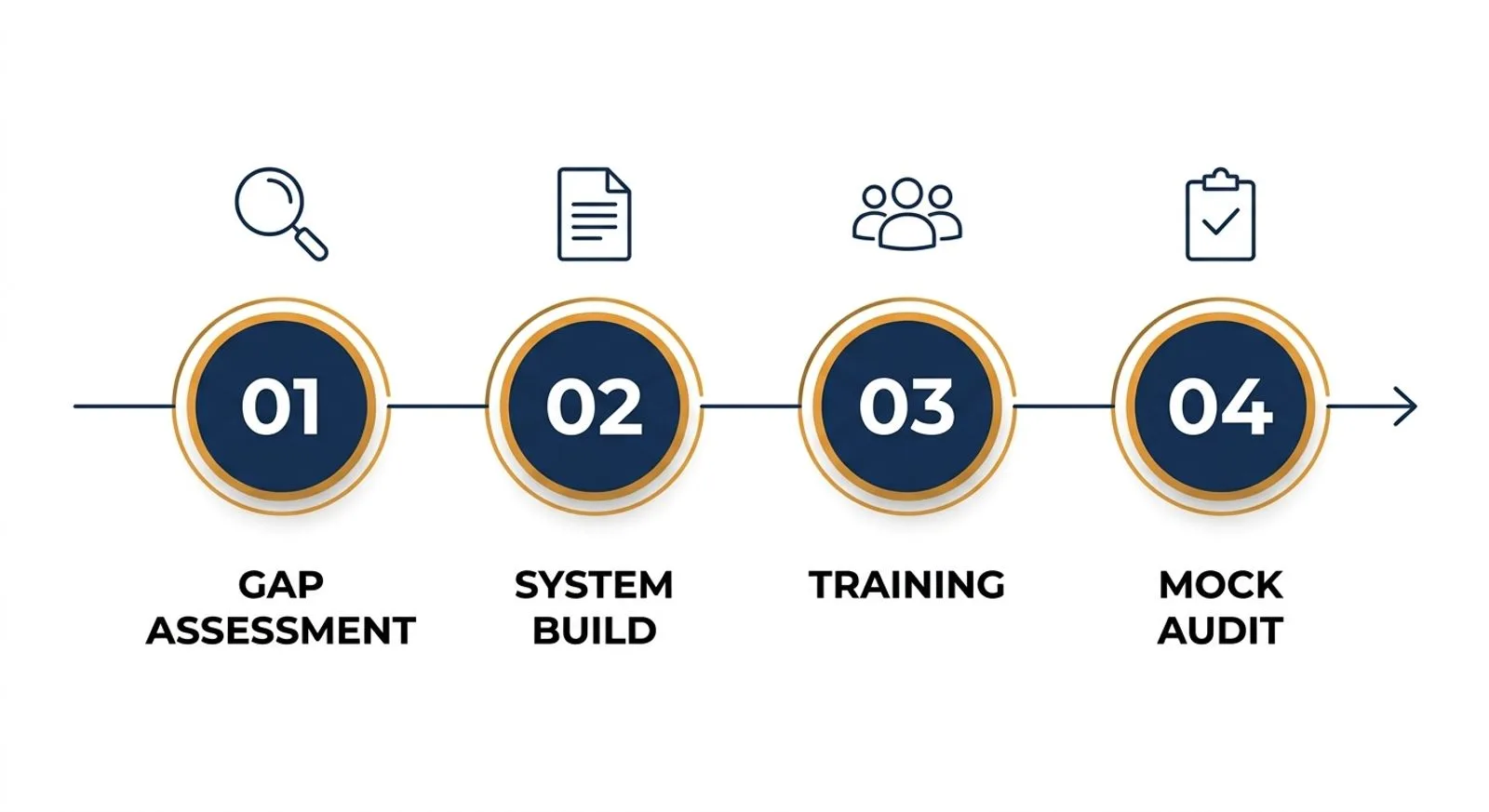
Our SQF Implementation Process
A structured four-step method designed to minimise disruption to production while building a food safety system your team can still run confidently after we leave.
Gap Assessment
An on-site walkthrough of your Metro Vancouver or Fraser Valley facility and a detailed review of your existing documentation against the SQF Code. You receive a findings report ranked by risk, plus a project timeline and scope you can budget against.
System Customisation
We build your food safety manual, HACCP validation, prerequisite programs, SOPs and record-keeping logs around your actual lines, shifts and product mix, and align them with your preventive control plan so nothing is documented twice.
Implementation & Verification
Your team puts the system into operation while we verify it is holding on a normal production day: records completed as the work happens, monitoring inside defined limits, and floor practice matching the documented procedure. We work around your shift patterns rather than pulling crews off the line.
Mock Audit & Audit Day
A full mock audit dress rehearsal, close-out of remaining gaps, and on-call support during your certification audit so someone who knows your system is reachable the moment an auditor asks a difficult question.
Cold Chain, the Port of Vancouver & Export Documentation
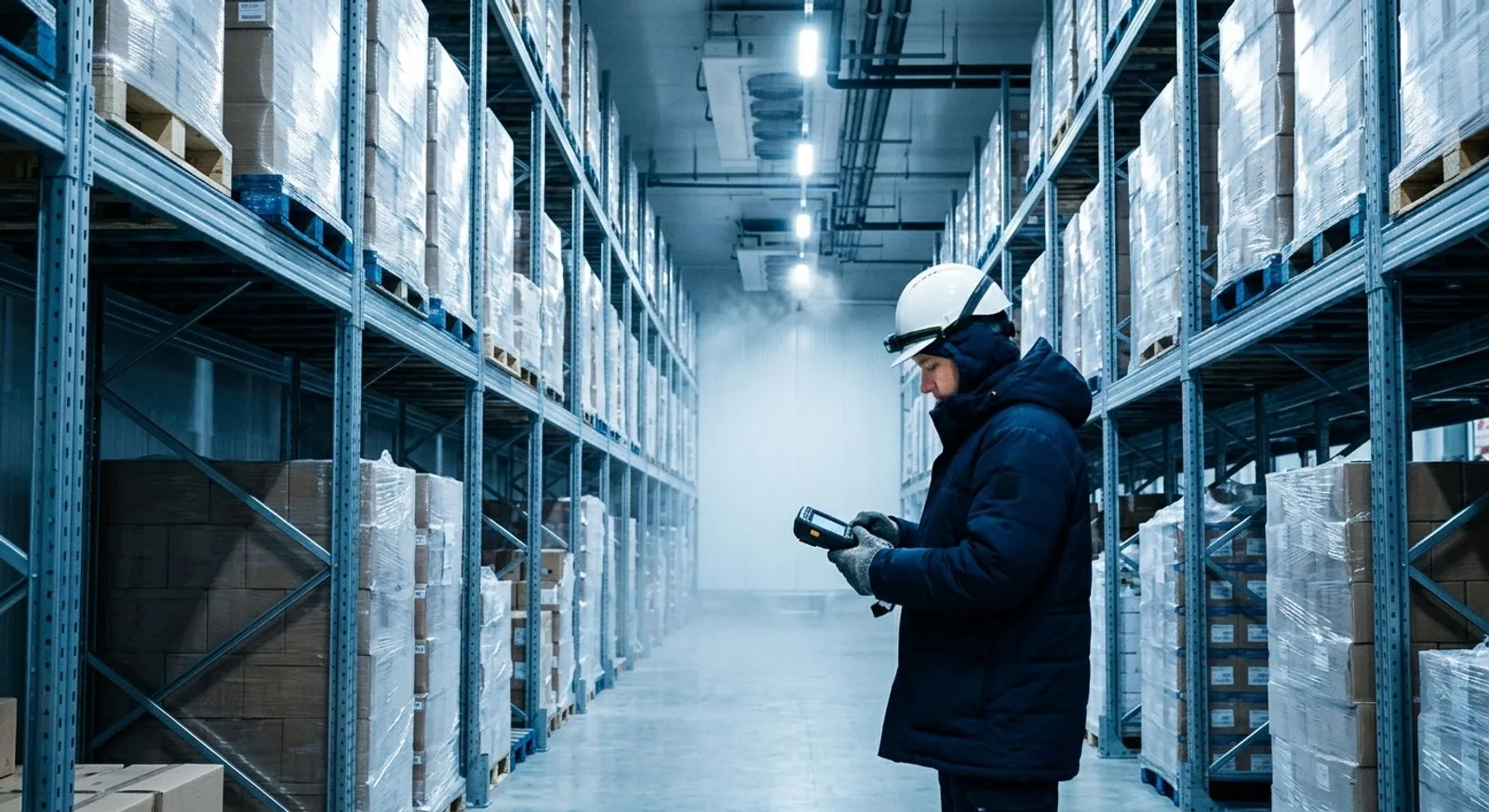
Vancouver is a port city, and that single fact shapes almost every food safety system we build here. Product moves through the Port of Vancouver — Canada's largest port, handling roughly 150 million tonnes of cargo a year — into a dense network of refrigerated warehouses, transload buildings and third-party logistics operations concentrated in Richmond, Delta, Surrey and along the Fraser River. Every handoff in that chain is a moment where temperature history, lot identity and condition of receipt either get recorded properly or quietly disappear. When a buyer later asks where a specific pallet went, the answer either lives in those records or it does not exist at all.
For storage and distribution operations, the SQF Food Safety Code for Storage and Distribution is the applicable standard, and it puts weight on exactly the things that are easiest to let slide in a busy warehouse: documented temperature monitoring with defined action limits and a named person responsible for responding to excursions, product identification that survives repalletising and mixed-load consolidation, stock rotation you can prove from records rather than assert from habit, and formal control over damaged, returned and on-hold goods. Auditors also look hard at how you approve and monitor the carriers you hand product to, because your control obligation does not end at the dock door — it follows the product to its destination.
Exporting adds a second rulebook on top of the first. If you ship into the United States, your American importer carries obligations under the Foreign Supplier Verification Program, and satisfying them means producing documentation of your hazard analysis and preventive controls on their timeline, not yours. For anyone handling items on the FDA Food Traceability List — leafy greens, fresh-cut produce, finfish, crustaceans, soft cheeses and more — the FSMA Section 204 requirements for Critical Tracking Events and Key Data Elements apply to product entering the US market regardless of where it was produced. We design lot coding, receiving and shipping records so those requests can be answered from a standing system instead of a weekend scramble through spreadsheets and email threads.
The practical payoff of getting this layer right is cumulative. The same discipline that satisfies an auditor lifts your supply chain and traceability performance, shortens your response time when a customer asks a trace question mid-shift, and turns a potential recall into a bounded, defensible exercise rather than an operational crisis. For BC exporters shipping seafood to Asia or produce south of the border, documentation quality is increasingly part of the commercial conversation — sophisticated buyers read your traceability capability before they read your price list.
Which Food Safety Requirements Apply to Your BC Facility
British Columbia facilities answer to more than one authority, and which one applies to you changes the shape of your food safety system. Use this as an orientation, then let us confirm the detail for your specific site and product mix, including which edition of the SQF Code, Edition 9 or Edition 10, your certification body will audit you against.
| Facility type | Primary oversight | Baseline legal requirement | Typical SQF code |
|---|---|---|---|
| Food manufacturer selling interprovincially or exporting | CFIA, under the Safe Food for Canadians Regulations | SFC licence, written preventive control plan, traceability records | SQF Food Safety Code for Manufacturing |
| Fish and seafood processor | CFIA, SFCR fish and seafood requirements | SFC licence, preventive control plan addressing species verification, histamine and parasite controls | SQF Food Safety Code for Manufacturing |
| Greenhouse or field produce packer | CFIA, with CanadaGAP widely used at farm level | Preventive control plan, water and worker hygiene controls, lot-level traceability | SQF Primary Production or Manufacturing |
| Provincially regulated food premises selling only within BC | Vancouver Coastal Health or Fraser Health, under the BC Public Health Act | Health authority operating permit, food safety plan, FOODSAFE-trained staff | SQF Fundamentals or Manufacturing |
| Meat processor or abattoir selling only within BC | BC Ministry of Agriculture and Food, Meat Inspection Regulation | Provincial licence class and inspection requirements | SQF Food Safety Code for Manufacturing |
| Cold storage, 3PL and distribution | CFIA, SFCR storage and handling provisions | Licence where applicable, temperature monitoring and traceability records | SQF Food Safety Code for Storage and Distribution |
| Food packaging manufacturer | Health Canada and CFIA, food contact materials | Evidence that materials are suitable for food contact, preventive controls | SQF Food Safety Code for Food Packaging |
| Supplier shipping into the United States | US FDA, via your importer's FSVP obligations | FDA facility registration, hazard documentation for the importer, FSMA 204 records for listed foods | SQF plus buyer-specified FSVP documentation |
Traceability, Mock Recalls & Proving It Under Pressure
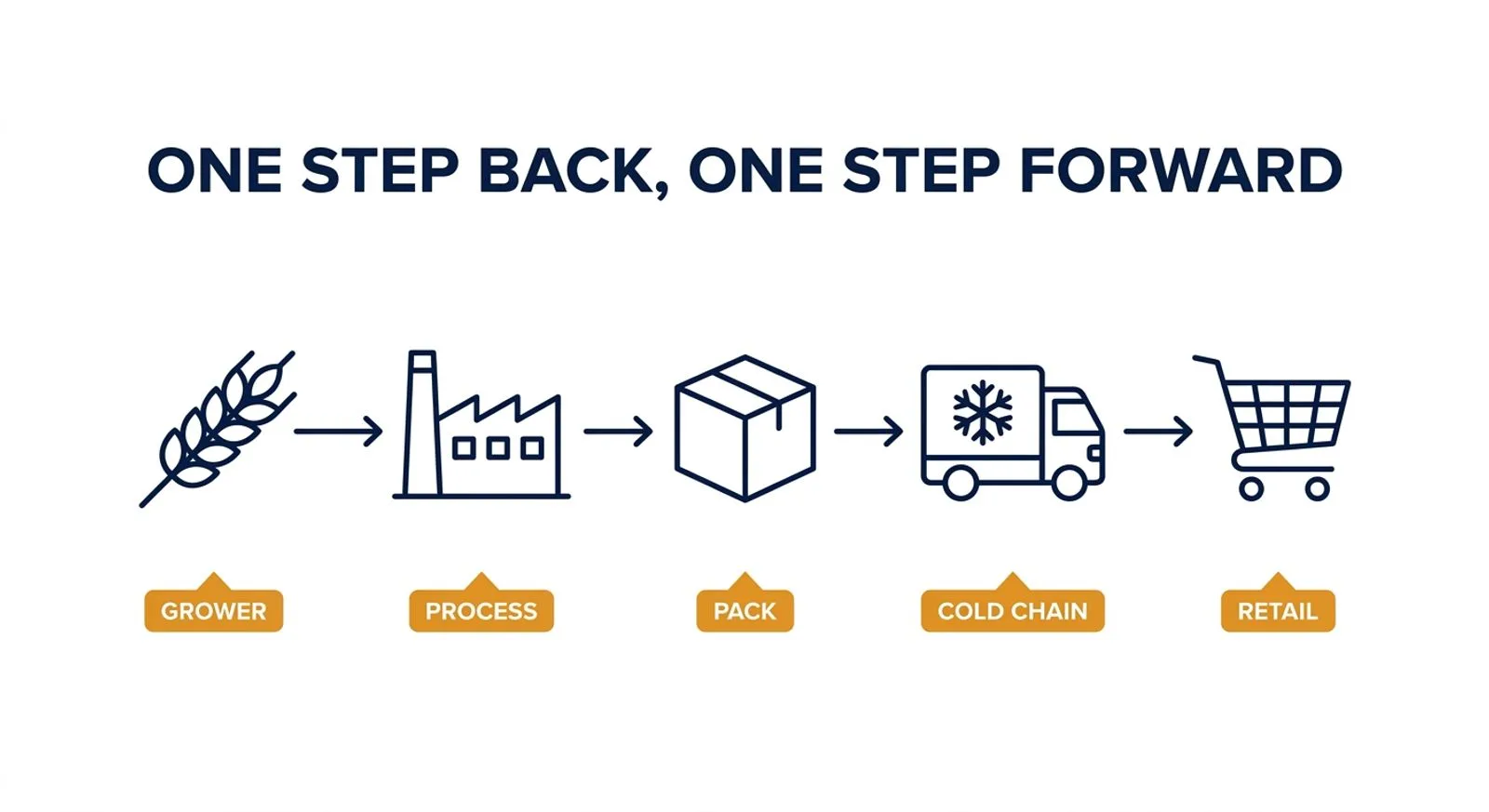
Traceability is where good intentions meet arithmetic. Both the Safe Food for Canadians Regulations and the SQF Code expect you to trace one step back to your suppliers and one step forward to your customers, and to do it quickly. The regulations set an expectation measured in hours, not days. Most facilities believe they can meet that until the first time somebody actually asks them to.
The failure point is almost never the paperwork at either end. It is the middle, where inbound ingredient lots get consumed across multiple production runs, rework goes back into a batch, and the outbound pallet carries a code that cannot be reconciled to the raw material it came from. Facilities that treat FSMA 204 and SFCR traceability as a filing problem discover this during a mock recall. Facilities that treat it as an operational design problem, with lot identity carried deliberately through every transformation, pass the exercise and pick up stronger supply chain scores as a side effect.
We run traceability the way an auditor does. We pick a finished product lot at random, ask you to work it back to every ingredient, supplier and shift involved, then forward to every customer and shipment that received it. We time it, we check the mass balance, and we document where the chain broke. Then we redesign the coding, receiving and production records so it does not break again.
Where Digital Record-Keeping Earns Its Cost
This is the point where technology stops being a software pitch and starts being the difference between a four-hour trace and a four-day one. Paper monitoring logs fail in three predictable ways: they get completed retroactively, they get completed incorrectly, and they cannot be searched when you need them most. Digitising the right records — CCP monitoring, fridge and freezer temperature capture, sanitation verification, corrective actions and lot movement — replaces all three failure modes with timestamped entries nobody can backdate.
We are deliberately selective about what moves off paper. Continuous temperature logging with automated excursion alerts pays for itself the first time a compressor fails overnight, because the alert reaches a named responder instead of being discovered at the next manual check. Lot movement and mass balance are worth digitising because that is precisely where manual traceability collapses. Conversely, a glass and brittle plastic register or a visitor log rarely justifies the change-management cost of a new system. Automated capture also produces something an auditor values highly and paper cannot offer: a complete, tamper-evident record of who did what and when, plus trend data that lets you spot a drifting process before it becomes a deviation.
We implement this with tools you already own wherever possible, and we will tell you when your existing spreadsheets and sensors are genuinely sufficient. The objective is fewer places for a record to go missing, not another subscription for your team to manage.
A mock recall is not a paperwork exercise for its own sake. It is the cheapest possible rehearsal for the day a customer complaint, a supplier notification or a positive test result means you have to do it for real, with your buyer on the phone.
“An auditor is not really reading your binder. They are checking whether the plant in front of them behaves like the plant your documents describe. Every hour spent making those two things match is worth ten spent rewriting procedures nobody on the floor has read.”
What Working With Us Actually Looks Like
No template binders, no theory, no consultant who has never run a sanitation shift. Here is what you get and how we work.
On-site, not over email
We come to your plant. Systems built from photographs and phone calls are the ones that fall apart when an auditor follows the product flow through the building and finds it does not match the diagram.
Documentation written for your floor
Your SOPs describe your equipment, your shifts and your product mix in language your supervisors use. If a procedure only makes sense to a consultant, it will not be followed once we leave.
One system, not three binders
Your SQF requirements, HACCP plan and preventive control plan are mapped onto the same documents and the same daily routines, so your team completes a record once and it serves every obligation.
An honest timeline before you commit
The gap assessment produces a scope and schedule you can budget against, and a clear statement of what has to accumulate as records before an audit date is realistic for your site.
Auditor-perspective mock audits
We interview your line staff, pull records at random and run a live traceability exercise, then close out the findings while there is still time to fix root causes rather than paper over them.
Support when non-conformances land
If findings come back from your certification body, we help you build root cause analysis and corrective actions with the evidence package your auditor expects inside the response window.
Straight answers about scope
If your buyer specifies a scheme we are not the right partner for, or your site needs work we do not provide, we will say so on the first call rather than three months into an engagement.
Automated records where they matter
We digitise the logs that genuinely benefit from it — CCP monitoring, temperature capture with excursion alerts, corrective actions and lot movement — so entries are timestamped, searchable and impossible to backdate. Paper stays where paper works.
Is Your Vancouver Facility Ready for an SQF Audit?
These are five things an auditor will verify within the first hour of walking into your plant. Toggle what is genuinely true for your site today for an honest read on where you stand.
Food Safety Consulting Built for the BC Food Industry
British Columbia does not have one food industry. It has a cluster of quite different ones packed into a small geography, and a system that works in a Steveston seafood plant will not transfer cleanly to an Abbotsford poultry facility or a Burnaby bakery. Writing documentation that ignores those differences is how facilities end up with a manual describing a plant nobody recognises.
Seafood and Shellfish
Richmond and Steveston remain the heart of BC seafood processing, with wild salmon, groundfish, farmed salmon and shellfish moving through facilities that face a harder version of the SQF challenge than most. Seafood carries hazards other categories do not: histamine formation in scombroid species, parasites requiring defined freezing controls, species verification and labelling accuracy, and shellfish harvest area classification and tagging. Much of the product is destined for export, which layers importer documentation demands on top of the SQF Code. We build hazard analyses that treat these as the primary risks they are, rather than as footnotes to a generic manufacturing template.
Fraser Valley Dairy, Poultry and Berries
The Fraser Valley around Abbotsford, Chilliwack and Langley carries the province's densest concentration of dairy, poultry and berry production. Poultry processors are typically working under continuous federal inspection already, which sounds like an advantage until an SQF auditor asks for validation evidence and a food safety culture program that inspection never required. Dairy processors carry pasteurisation controls and provincial obligations that intersect with the SQF Code in ways that reward careful document design. Blueberry and berry packers face intense seasonality, which means the system has to be built and running before the crop arrives, not during it.
Greenhouse and Produce Packing
Delta, Surrey and Abbotsford host a substantial greenhouse sector growing peppers, tomatoes and cucumbers, alongside field vegetable and packing operations. These sites often already hold CanadaGAP certification at the growing level and are being pushed toward SQF at the packing and processing level by retail buyers. Water treatment and testing, worker hygiene facilities, sanitation of packing lines and lot-level traceability from block to pallet are where the points are won and lost.
Bakery, Prepared Foods and Co-Packing
Burnaby, Richmond, Surrey and Vancouver itself carry a deep bench of bakery, snack, beverage, plant-based and prepared foods manufacturing, plus a large co-packing and private label sector. Co-packers face a specific pressure: every customer may demand a different standard, a different specification set and their own audit on top of your certification. Allergen management is usually the critical control, because shared lines and frequent changeovers create exactly the conditions where a validated cleaning and segregation program earns its cost. We design frameworks that answer multiple customer requirements from one documented system, so winning a new account does not mean rebuilding your quality program.
What Actually Determines Whether You Pass
Across every one of these sectors, the facilities that struggle share the same pattern, and it is not a lack of effort. It is a documented system that has drifted away from the operating reality of the building. Our entire method exists to close that distance before audit day, by writing the system around what your people actually do and then improving the practice where it genuinely needs improving. That takes longer at the start than issuing a template. It is also the difference between a certification you keep and a certification you have to rescue every year.
SQF Consulting for Practical, Plant-Floor Operations
Our clients are the people who have to pass the audit: QA managers, plant managers and owners who cannot halt production to build a certification program from scratch. We design around your sector and your constraints.
Vancouver SQF Certification & Food Safety FAQs
Straight answers to the questions BC food manufacturers ask us on a first call.
What does an SQF consultant in Vancouver actually do?
We build and validate the food safety management system your certification audit will be measured against. In practice that means a gap assessment of your current site, a documented and validated HACCP plan, prerequisite programs and SOPs written around your equipment and shifts, on-site verification that the system is being followed, and a full mock audit before your certification body arrives. Your certification body performs the audit itself and issues the certificate, and we prepare your facility and your documentation for it. See all services
How long does SQF certification take for a BC facility?
For most first-time sites the honest range is three to nine months, and where you land depends on what already exists. A plant with a working HACCP plan and disciplined records moves quickly. A plant starting from informal practice needs longer, because the SQF Code requires evidence that your system has been operating over time, and that history cannot be compressed. A gap assessment gives you a real timeline for your site rather than a guess. Book a gap call
What does SQF consulting cost?
Consulting fees vary with facility size, product risk, the number of production lines and how much of the work your internal team can absorb. Separate from consulting, you pay your certification body directly for the audit itself, and that fee scales with audit duration and site complexity. We scope accurately after a gap assessment rather than quoting blind over the phone.
Is SQF certification a legal requirement in Canada?
No. Your legal baseline is federal or provincial: a Safe Food for Canadians licence and a written preventive control plan for CFIA-regulated activities, or a health authority operating permit if you sell only within British Columbia. SQF certification is a commercial requirement driven by your buyers. It exists so a retailer or distributor can accept a GFSI-benchmarked certificate instead of auditing every supplier themselves.
Which SQF code applies to my facility?
It depends on what you do. Manufacturers and processors fall under the SQF Food Safety Code for Manufacturing. Warehouses, 3PLs and distributors use the Food Safety Code for Storage and Distribution. Packaging converters use the Food Safety Code for Food Packaging, and growing and harvesting operations use Primary Production. We confirm the correct code and scope during the gap assessment, because getting it wrong is an expensive way to start.
Do you work to SQF Edition 9 or SQF Edition 10?
Both. Which edition your audit is conducted against is set by your certification body and the date your audit falls on, so confirming it is the first thing we do before writing a line of documentation. If you are already certified to Edition 9, we map the manual, prerequisite programs and records you already run onto the Edition 10 structure and isolate what genuinely has to change, rather than rewriting a system that is working. If you are certifying for the first time, we build to the edition your certification body confirms will apply on your audit date. For the current transition timing, ask your certification body or SQFI to confirm it in writing, because that schedule is theirs to set. Ask about your edition
We are a small operation. Is SQF realistic for us?
Often yes, and the entry point matters. SQF Fundamentals is designed for smaller and less complex sites and gives you a structured, achievable path that many buyers will accept as a stepping stone toward full Food Safety Code certification. We will tell you honestly on the first call whether Fundamentals or the full code is the right starting point for your site and your customer's requirements.
What happens if we receive non-conformances at our audit?
Receiving some is common rather than catastrophic, and most are correctable within a defined response window set by your certification body. What matters is the quality of your response: a genuine root cause analysis, a fix that addresses the cause rather than the symptom, and evidence that the fix is holding. We help facilities build that evidence package and submit it inside the window. Get corrective action help
We export to the United States. Does SQF cover FDA requirements?
Not automatically, though it helps considerably. Your US importer carries obligations under the Foreign Supplier Verification Program and will ask you for documentation of your hazard controls. If you handle foods on the FDA Food Traceability List, FSMA Section 204 record requirements apply to product entering the US market. We build lot coding and record systems that satisfy both your SQF supply chain requirements and your importer's requests.
Do you provide food safety training for our staff?
We do not deliver staff training courses. We build and verify the food safety management system itself: the gap assessment, HACCP plan, prerequisite programs, SOPs, records and mock audit. Where the SQF Code requires documented competency for your team, we specify what that training has to cover and what evidence your auditor will expect, and you deliver it in-house or through a dedicated training provider. Keeping the two separate also keeps our verification of your system genuinely independent.
Do you work on-site across Metro Vancouver and the Fraser Valley?
Yes. We work on-site throughout Metro Vancouver including Vancouver, Richmond, Burnaby, Surrey, Delta and Coquitlam, and across the Fraser Valley through Langley, Abbotsford and Chilliwack. We also support facilities on Vancouver Island and in the Interior, combining on-site visits for assessment, verification and mock audits with remote work for documentation development. Talk to us
Working With a Vancouver SQF Consultant: Coverage & Logistics
Proximity matters more in this work than people expect. A gap assessment, on-site verification and a mock audit all have to happen inside your building, on your shifts, with your crews. We schedule site work around production rather than asking you to stop it, which frequently means early mornings before a line starts, evenings during sanitation, or a weekend when a changeover gives us access to equipment we would otherwise never see running.
Where we work on-site. Across Metro Vancouver we cover Vancouver, Richmond, Burnaby, New Westminster, Surrey, Delta, Coquitlam, Port Coquitlam, Langley and North Vancouver. In the Fraser Valley we work throughout Abbotsford, Mission and Chilliwack. We also travel to facilities on Vancouver Island and in the Okanagan and Interior, and for multi-site businesses we build one documented framework that can be deployed consistently across every location instead of letting each plant drift into its own version.
How the engagement splits. The work that genuinely requires our presence is assessment, verification and the mock audit. Documentation development, hazard analysis review, specification management and corrective action packages are handled efficiently between visits, which keeps travel costs off your invoice and keeps momentum between site days. You always know which phase you are in and what is expected from your team next.
What we ask of you. The engagements that go quickly are the ones where a named person inside your business owns the project internally, has authority to make decisions about process and equipment, and can get us access to records and to the floor. We supply the expertise, the structure and the documentation. Your team supplies the operational knowledge, the day-to-day discipline to run the system and any staff training the code calls for, because that is what an auditor is ultimately assessing.
If you are not sure whether you need a full implementation or a second opinion on a system you have already built, the first call costs nothing and usually clarifies it in twenty minutes.
Partner With a Trusted Vancouver SQF Consultant
Whether you are pursuing certification for the first time because a buyer has asked for it, or strengthening a system that has already been through an audit, we build practical programs your team can maintain. Tell us what your buyer or auditor is asking for and we will map the path. The first consultation is free.