
SQF CERTIFICATION CONSULTING · GFSI-BENCHMARKED · ARIZONA SPECIALISTS
Food Safety & SQF Consultant in Arizona
Partner with a certified SQF consultant in Arizona to build practical, audit-ready food safety systems to SQF Edition 9 or Edition 10. We specialize in HACCP-based food safety plans, gap assessments, SQF documentation, staff training, and mock audits for produce packers and shippers, fresh-cut processors, importers, cold storage operators, and food manufacturers from Yuma and Nogales to Maricopa and Pima counties.
SQF Certification & Food Safety Consulting in Arizona
Whether a national retail buyer has just made SQF certification a condition of your next contract, or a winter deal period is closing in faster than your team can prepare, our Arizona food safety consultants handle the heavy lifting. We build to SQF Edition 9 and Edition 10, and we take documentation, staff training, and audit preparation off your plate without stopping production.
SQF Gap Assessment
An on-site walkthrough of your facility and a line-by-line review of your existing paperwork against the SQF Code. We confirm with your certification body which edition your audit will be scored against, rank every finding by risk, and hand you a realistic timeline you can take to ownership before you commit to an audit date.
Book a gap callSYSTEM BUILDSQF Documentation & SOPs
We write your food safety plan, HACCP validation, prerequisite programs, SOPs, and record-keeping logs around your actual equipment, shift patterns, and seasonal labour, structured to the SQF edition that applies to your site. The goal is a system your supervisors will actually run during a Yuma winter deal, not a binder that only makes sense on audit day.
View serviceSTAFF TRAININGStaff Training & Implementation
Structured SOP training, daily checklists, and practical guidance for your floor leads and supervisors, delivered in English and Spanish where your crews need it. We make sure your production team understands the system and executes standard operating procedures consistently every shift, including during peak seasonal ramp-up.
Talk to usAUDIT PREPMock & Internal SQF Audits
A full dress rehearsal of audit day, from the opening meeting through the facility walkthrough and records review. We interview your line staff the way an auditor will, surface the non-conformances that cost points, and close them out while there is still time to fix them properly rather than argue them at closing.
View serviceCORRECTIVE ACTIONCorrective Action Support
If your audit has already happened and non-conformances landed, we help you run root cause analysis, build corrective and preventive actions, and assemble the evidence package your certification body expects inside the response window. Speed matters here, and so does getting the root cause right the first time.
Get help nowEDITION TRANSITIONEdition 9 to Edition 10 Transition
If your site is certified under Edition 9 and your next audit falls under Edition 10, we map the differences against the system you already run, revise only the documents and programs that genuinely change, update the affected records and training, and keep a clear revision history. An edition change should be a controlled update to a working system, not a rebuild.
View serviceProduce Safety, Fresh-Cut & FSMA 204 in Arizona
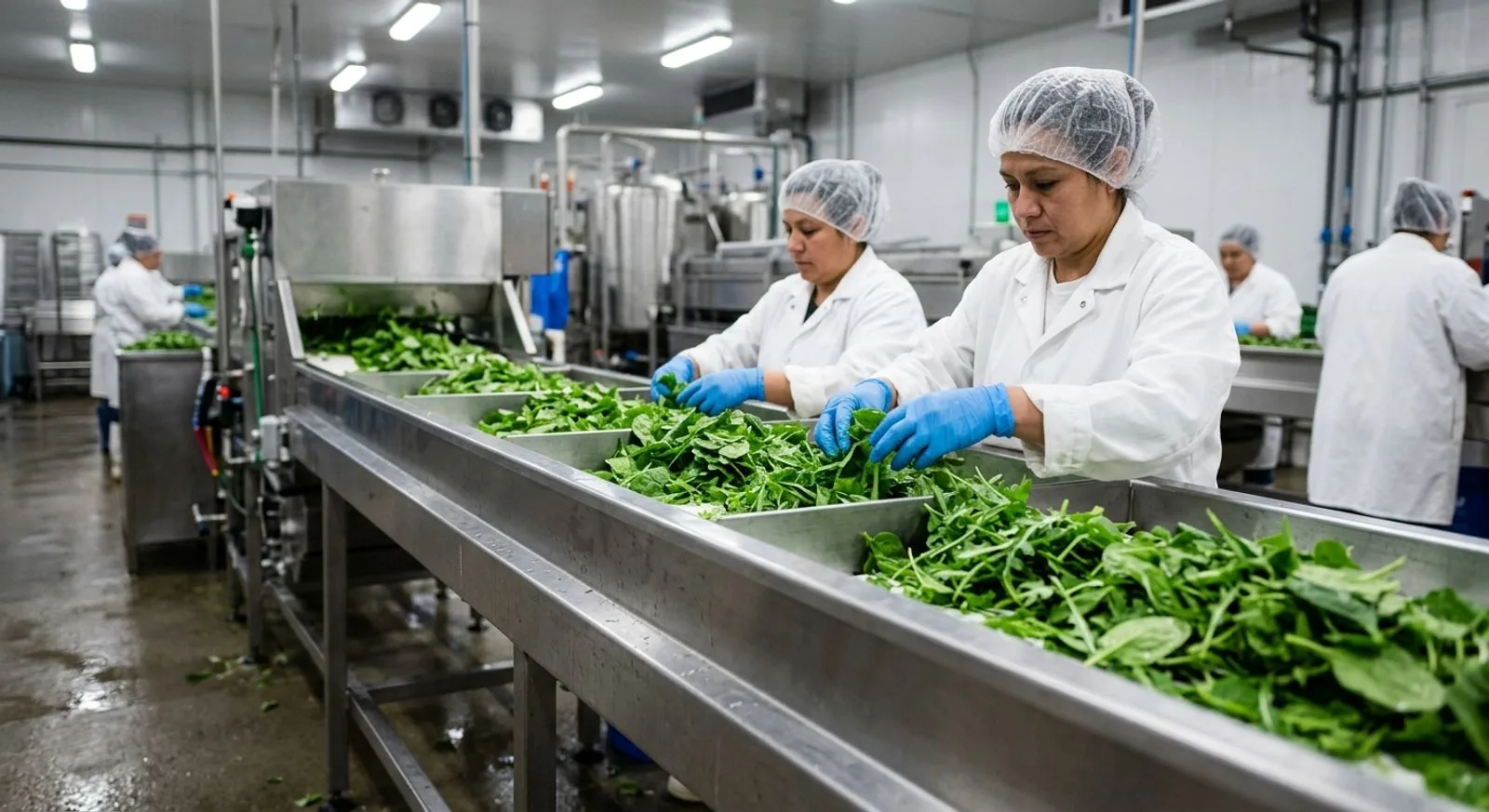
Arizona's produce sector is unlike any other state's, and an SQF system built without accounting for that will struggle. Yuma County supplies the overwhelming majority of the leafy greens consumed in the United States between November and March, which means an enormous volume of high-risk product moves through a compressed winter window under intense buyer scrutiny. When a leafy greens outbreak makes national news, Arizona growers and processors feel the commercial consequences whether or not their product was implicated.
That reality shapes how we build food safety systems here. Leafy greens, melons, and fresh-cut vegetables carry no kill step. There is no thermal process to fall back on, so your entire food safety argument rests on prevention: agricultural water controls, harvest sanitation, equipment hygiene between lots, temperature discipline from field to cooler, and traceability precise enough to isolate a single lot rather than a week's production. The SQF Code expects that argument to be documented, validated, and verifiable.
Most Arizona produce operations already carry obligations under the FDA Produce Safety Rule, and many are also subject to the Leafy Greens Marketing Agreement or buyer-specific harvest protocols. These overlap heavily with SQF requirements but are not identical, and we routinely find facilities maintaining three parallel sets of paperwork that say slightly different things. Consolidating them into one system that satisfies every audience is usually the single largest efficiency gain available.
FSMA 204 traceability adds another layer, and leafy greens, melons, fresh-cut produce, and several other Arizona staples sit squarely on the Food Traceability List. Compliance dates for the rule have been subject to change by the FDA, so we treat the deadline as something to confirm against current FDA guidance rather than a fixed number to quote. What does not change is the underlying requirement: you need to capture defined key data elements at each critical tracking event and produce them quickly when asked. Building that into your SQF traceability programme now avoids doing the work twice.
Cold Chain, Cross-Border Imports & FSVP Obligations
Nogales is one of the busiest produce ports of entry in the United States, and the flow of Mexican tomatoes, peppers, cucumbers, squash, and berries through Santa Cruz County shapes the food safety obligations of a large number of Arizona businesses. If your company brings product across that border, you are almost certainly an importer under the Foreign Supplier Verification Programme, and that obligation is entirely separate from your SQF certification.
We see the same confusion repeatedly. A distributor assumes their SQF approved supplier programme satisfies FSVP, or that an FSVP file covers their SQF supplier approval requirements. The two overlap but do not substitute for one another. FSVP is a regulatory obligation enforced by the FDA that requires hazard analysis of each imported food, evaluation of the foreign supplier's performance, and documented verification activities. SQF supplier approval is a certification requirement your auditor will score. We build one consolidated supplier file that satisfies both, with a clear map showing which evidence answers which requirement.
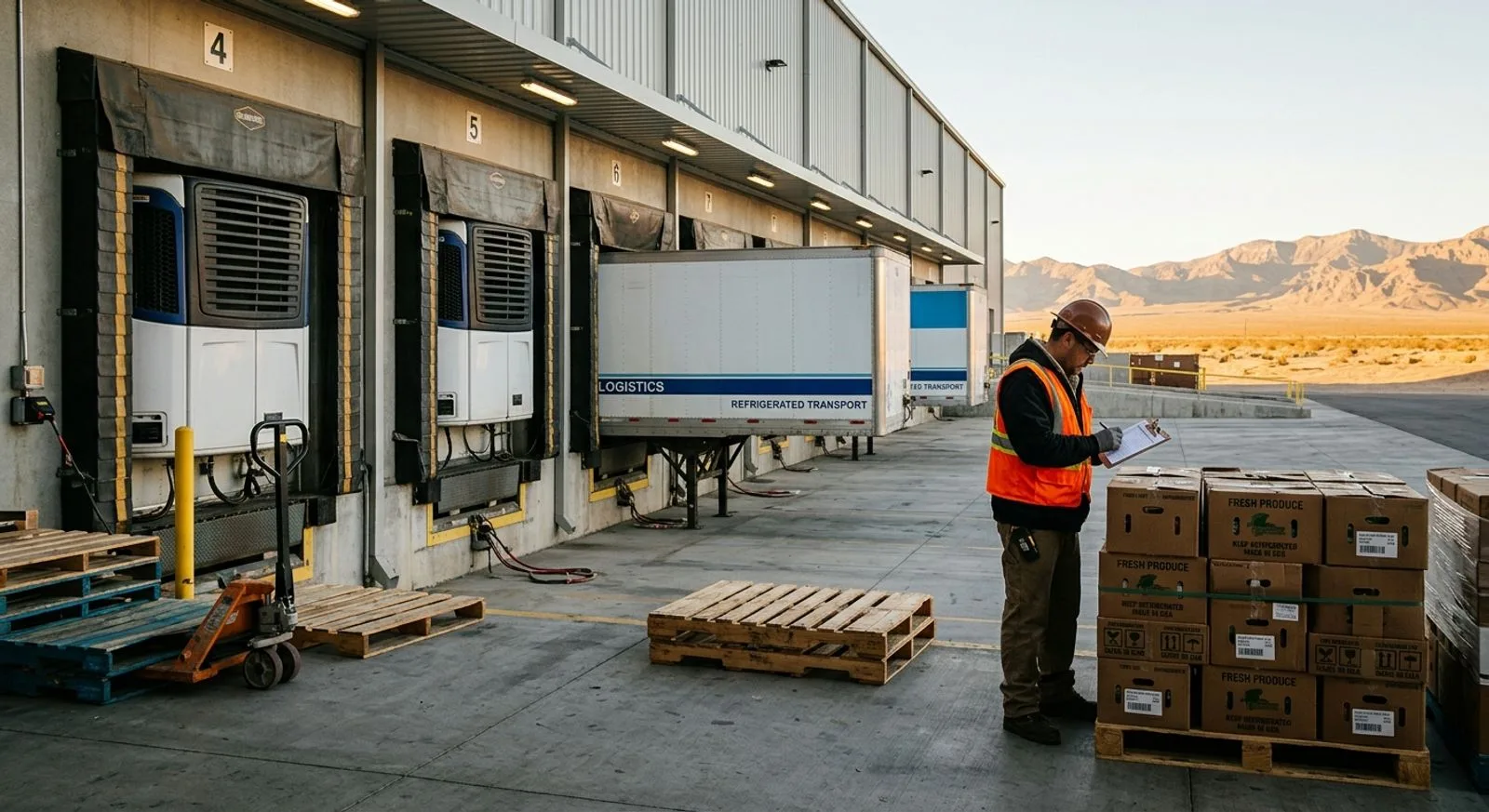
Cold chain integrity is the other constant. Product crossing at Nogales or moving up the I-10 and I-19 corridors to Tucson and Phoenix spends time in ambient conditions that are punishing for much of the year. Your SQF system needs defined temperature limits, continuous or documented monitoring, and a corrective action procedure that tells a receiving clerk exactly what to do at two in the morning when a trailer arrives above specification. Vague instructions to notify a supervisor fail on audit day and, more importantly, fail in practice.
For cold storage and third-party logistics operators, the relevant SQF scope is storage and distribution rather than manufacturing, which changes the shape of the system considerably. Sanitation, pest control, allergen segregation, stock rotation, and traceability across customer-owned inventory carry the weight. We scope these engagements to match what an auditor will actually examine rather than importing a manufacturing template that does not fit.
Our Proven SQF Implementation Process
We follow a structured, four-step methodology designed to minimize operational disruption while building a food safety system your team can maintain after we leave.
Gap Assessment
An on-site walkthrough of your Arizona facility and a detailed review of your existing paperwork against the SQF Code. You receive a findings report ranked by risk and a project timeline you can budget against, scheduled around your seasonal production peaks.
System Customization
We write your food safety plan, HACCP validation, prerequisite programs, SOPs, and record-keeping logs around your actual equipment, shifts, and product mix rather than a generic template.
Implementation & Staff Training
Comprehensive GMP and record-keeping training for supervisors and line staff, establishing daily routines that hold up on a normal production day, not just during preparation week. Delivered bilingually where your crews need it.
Mock Audit & Audit Day
A full mock audit dress rehearsal, close-out of remaining gaps, and on-call support during your certification audit so someone who knows your system is reachable when the auditor asks a hard question.
Is Your Arizona Facility Ready for an SQF Audit?
These are five things an auditor will verify within the first hour of walking into your plant. Toggle what is genuinely true for your site today to get an honest read on your readiness.
Food Safety Consulting Built for the Arizona Food Industry
A state with an unusually seasonal food economy
Arizona's food industry does not run at a steady rate through the year, and any consultant who ignores that will propose a project plan you cannot execute. The Yuma winter vegetable deal concentrates enormous volume into roughly five months, during which packing sheds and fresh-cut plants run at capacity with a workforce that swells dramatically and then contracts. Asking a QA manager to rebuild a documentation system in January is not realistic. We plan implementation work around your calendar, doing the heavy build during the shoulder season and reserving the peak for verification and light-touch support.
That seasonality also creates a specific audit risk that catches facilities out. The SQF Code requires evidence that your system has been operating, not merely that it exists. A site that documents diligently during slow months and lets records slip during peak will have exactly the wrong evidence available when an auditor samples the busiest weeks of the year. We design record-keeping that a supervisor can complete honestly in ninety seconds during a hectic shift, because a simple record that gets filled in beats a thorough one that does not.
Seasonal and bilingual workforces
Training is where seasonal operations most often lose points. If a meaningful share of your line staff joins for a single season, your training programme has to onboard people to a competent standard quickly and prove it happened. An auditor will ask a worker hired six weeks ago what they do when they see a problem, and the answer needs to be specific. We build training that is short, role-specific, and repeatable, with records that link each person to the procedures they were actually trained on rather than a signature on a generic attendance sheet.
Much of Arizona's food production workforce is Spanish-speaking, and in some operations that is the clear majority. Procedures written only in English are a genuine food safety weakness, not just a paperwork problem. An operator who cannot read the corrective action prompt on a monitoring log will either guess or skip it. We work with clients to ensure critical SOPs, hygiene instructions, and corrective action prompts exist in the languages spoken on the floor, and that translations stay synchronised when the master document is revised.
Water, drought and a desert operating environment
Agricultural and process water deserve specific attention in Arizona. Sustained drought across the Colorado River basin has pushed growers and processors toward alternative and reclaimed sources, and any change in water source is a food safety change that your system has to account for. Where your water comes from, how it is treated, how often it is tested, and what you do when a result comes back out of specification all need to be documented and defensible. An auditor who sees a water source change with no corresponding risk assessment will pursue it.
The wider desert environment shapes other programmes too. Pest pressure differs markedly from temperate states, with rodents and birds seeking shelter and water around facilities, so a generic pest control programme copied from a Midwest template will not hold. Dust intrusion during monsoon season affects sanitation and air handling. These are ordinary requirements of the SQF Code, but the specific risks and controls have to reflect where your plant actually sits.
Regulatory oversight across Arizona
Which agency regulates your site depends on what you make. The Arizona Department of Agriculture oversees dairy, egg, and meat and poultry activity, administers the state's produce safety programme under the FDA Produce Safety Rule, and runs state inspection where applicable. The Arizona Department of Health Services and county environmental health departments in Maricopa, Pima, Yuma and elsewhere handle food establishment licensing and inspection. Federally inspected meat and poultry plants answer to USDA FSIS, and most human food manufacturers carry FDA preventive controls obligations under FSMA. Federal programme requirements and USDA guidance are periodically revised, so we verify current agency guidance at the point of writing rather than relying on what was accurate at your last audit.
None of this replaces SQF certification. Regulatory inspection establishes that you are legally permitted to operate. SQF certification demonstrates to a commercial buyer that your food safety management system meets a GFSI-benchmarked standard, which is a different question answered for a different audience.
What we do and what stays with you
We are direct about the boundary. We build your food safety system, train your team to run it, and prepare you for audit. Your certification body conducts the audit and issues the certificate. The day-to-day ownership of the system sits with your staff, because a programme that depends on an outside consultant to function is a programme that fails the first time your circumstances change. Our objective is to leave you with something your own people run confidently.
If your operation is concentrated in the Phoenix metropolitan area, our Phoenix food safety and SQF consultant page covers the specific conditions of Maricopa County manufacturing, including extreme heat management and the Sun Corridor contract manufacturing sector, in more detail than a statewide page can.
SQF Consulting for Practical, Plant-Floor Operations
Our clients are the people who have to pass the audit: QA managers, plant managers, and owners who cannot halt production to build a certification program. We design systems around your sector and your constraints.
Arizona SQF Certification & Food Safety FAQs
Straight answers to the questions Arizona QA managers, plant managers and owners ask us most often.
What is SQF certification, and why is my buyer asking for it?
SQF (Safe Quality Food) is a food safety certification programme owned by SQFI and benchmarked against the Global Food Safety Initiative, which means major retailers and foodservice distributors accept it as proof that your facility manages food safety to an internationally recognised standard. Buyers ask for it because it lets them satisfy their own supplier approval requirements without auditing every vendor themselves.
How long does SQF certification take for an Arizona facility?
For most facilities the honest range is three to nine months, and where you land depends almost entirely on what already exists. A packing shed with a functioning food safety plan, disciplined records, and an experienced QA lead moves quickly. A site starting from informal practices needs longer, because the SQF Code requires evidence of your system operating over time. Seasonality matters here too: if your peak runs November through March, starting the build in spring gives you a far more comfortable path. A gap assessment is how you get a real timeline for your site rather than a guess.
Do you work to SQF Edition 9 or SQF Edition 10?
Both. The SQF Code is published in editions by SQFI, and which edition your audit is scored against is determined by your certification body and your audit date. Confirming that in writing is one of the first things we do at the gap assessment, because it shapes how your documentation is built. If this is a first certification, we build directly to the edition you will be audited against.
We are certified under Edition 9. How does the move to Edition 10 work?
As a controlled change, not a rebuild. We map the differences between the edition you are certified under and the one your next audit will be scored against, revise only the documents and programs that genuinely change, update the affected records and training materials, brief the staff whose responsibilities are affected, and keep a clear revision history so your auditor can see what changed and when. Most of a well-built system carries across unchanged. Confirm the applicable edition and your transition date with your certification body or SQFI in writing before you start, because that date drives the schedule.
Do you provide an SQF practitioner for our site?
No. The SQF Code requires that role to be filled by someone employed at your facility who knows your operation and is present day to day, so it is not something an external consultant can hold on your behalf. What we do is build the system that person runs, and make sure they are confident operating it before we step back.
Do you run official SQF training courses or issue certificates?
No. Official SQF courses and the certificates that come with them are tightly controlled by SQFI through their own approved channels, and we are not one of them. Our training is practical implementation training for your team: how your SOPs work, what records need completing, and what an auditor will ask them. If you need a formal SQF qualification, we will point you to the right SQFI channel.
Do you handle re-certification?
We do not provide re-certification services. Re-certification is conducted by your certification body against the applicable edition of the SQF Code. Where we help is in the preparation: keeping your system current, running internal and mock audits, and closing gaps before your next audit rather than after it.
Do I still need SQF if my operation is already inspected by the Arizona Department of Agriculture or USDA?
Yes, if your customer requires it. Regulatory inspection and GFSI certification answer to different masters. Arizona Department of Agriculture or USDA FSIS inspection verifies that you meet legal requirements to operate. SQF certification demonstrates to a commercial buyer that your food safety management system meets a global benchmark, covering food safety culture, supplier approval programmes, and management review. Neither one substitutes for the other.
We import produce through Nogales. Does SQF cover our FSVP obligations?
No, and this catches people out. The Foreign Supplier Verification Programme is a regulatory obligation enforced by the FDA that applies to you as the importer, while SQF supplier approval is a certification requirement scored by your auditor. They overlap substantially, so we build one consolidated supplier file that satisfies both and map clearly which evidence answers which requirement. Treating them as the same thing risks failing on both.
What happens if we fail our audit or receive non-conformances?
Most non-conformances are correctable within the response window set by your certification body, and receiving some is common rather than catastrophic. What matters is the quality of your corrective action: a genuine root cause analysis, a fix that addresses the cause rather than the symptom, and evidence the fix is holding. Confirm your specific response deadline with your certification body, as it varies with the severity of the finding.
How should we prepare for an unannounced audit?
By building a system that does not require preparation. Unannounced audits expose the gap between a facility that maintains its programme continuously and one that revives it a fortnight before a scheduled visit. For seasonal Arizona operations this is particularly sharp, because an unannounced audit during peak will sample exactly the weeks when discipline is hardest to maintain. Practically, it means records completed the day the work happens, internal audits actually conducted on schedule, and supervisors who know their responsibilities without a refresher.
What does SQF consulting cost?
Consulting fees vary with facility size, product risk, number of production lines, and how much of the work your internal team can absorb. Separate from consulting, you pay your certification body directly for the audit itself, and that fee scales with audit duration and site complexity. After a gap assessment we can scope the work accurately rather than quote a number that changes later.
“An auditor is not really reading your binder. They are checking whether the plant in front of them behaves like the plant your documents describe. In a seasonal operation that means looking hard at your busiest weeks, not your quietest ones.”
Partner with a Trusted Arizona SQF Consultant
Whether you are pursuing certification for the first time or strengthening an existing food safety system before the next deal period, we build practical programs your team can actually maintain. The first consultation is free.