
SQF CERTIFICATION CONSULTING · GFSI-BENCHMARKED · TEXAS SPECIALISTS
Food Safety & SQF Consultant in Texas
Partner with a certified SQF consultant in Texas to build practical, audit-ready food safety systems to SQF Edition 9 or Edition 10. We specialize in HACCP-based food safety plans, gap assessments, SQF documentation, staff training, and mock audits for food manufacturers, meat and poultry processors, packers, cold storage, and distribution facilities across the state.
SQF Certification & Food Safety Consulting in Texas
Whether a national retail buyer has just made SQF certification a condition of your next contract, or an upcoming audit deadline is approaching faster than your team can prepare, our Texas food safety consultants handle the heavy lifting. We build to SQF Edition 9 and Edition 10, and we take documentation, staff training, and audit preparation off your plate without stopping production.
SQF Gap Assessment
An on-site walkthrough of your facility and a line-by-line review of your existing paperwork against the SQF Code. We confirm which edition your certification body will score you against, rank every finding by risk, and hand you a realistic timeline you can take to ownership before you commit to an audit date.
Book a gap callSYSTEM BUILDSQF Documentation & SOPs
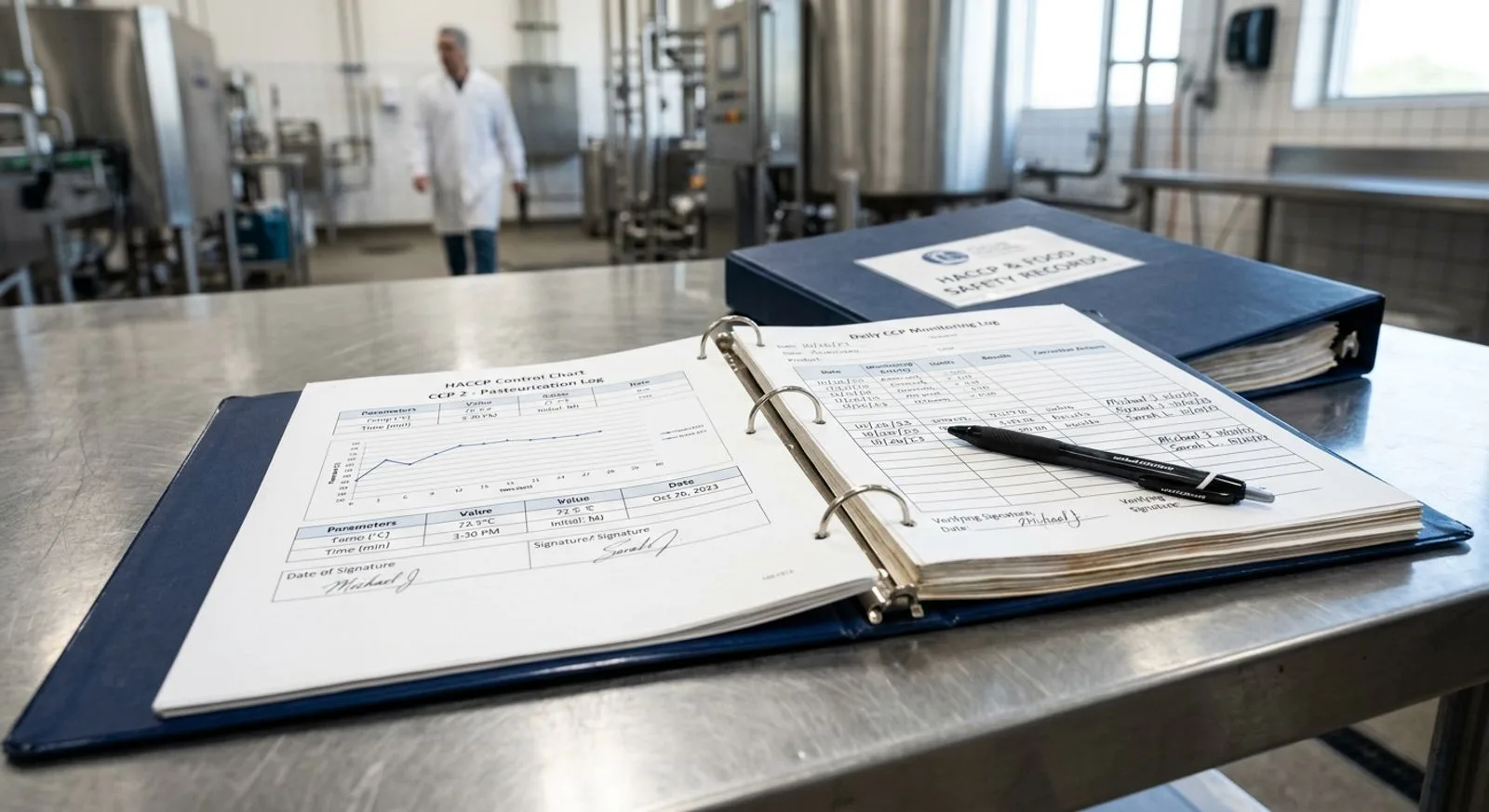
We write your food safety plan, HACCP validation, prerequisite programs, SOPs, and record-keeping logs around your actual equipment, shift patterns, and staffing, structured to the SQF edition that applies to your site. The goal is a system your supervisors will actually run on a Tuesday afternoon, not a binder that only makes sense on audit day.
View serviceSTAFF TRAININGStaff Training & Implementation
Structured SOP training, daily checklists, and practical guidance for your floor leads and supervisors. We make sure your production team understands the system and executes standard operating procedures consistently every shift.
Talk to usAUDIT PREPMock & Internal SQF Audits
A full dress rehearsal of audit day, from the opening meeting through the facility walkthrough and records review. We interview your line staff the way an auditor will, surface the non-conformances that cost points, and close them out while there is still time to fix them properly.
View serviceCORRECTIVE ACTIONCorrective Action Support
If your audit has already happened and non-conformances landed, we help you run root cause analysis, build corrective and preventive actions, and assemble the evidence package your certification body expects inside the response window. Speed matters here, and so does getting the root cause right the first time.
Get help nowEDITION TRANSITIONEdition 9 to Edition 10 Transition
If your site is certified under Edition 9 and your next audit falls under Edition 10, we map the differences against the system you already run, revise only the documents and programs that genuinely change, and retrain the staff affected. An edition change should be an update to a working system, not a rebuild.
View serviceHACCP, FSMA 204 & Texas Regulatory Compliance
SQF certification is our specialization, but a certificate is only as strong as the hazard analysis underneath it. Every engagement we run in Texas begins with the fundamentals: a documented, validated HACCP plan built around your actual biological, chemical, physical, and allergen hazards, with critical control points you can defend with data rather than assertion.
Texas facilities answer to more than one authority, and knowing which one applies to you changes the shape of your food safety system. The Texas Department of State Health Services licenses food manufacturers and wholesalers operating in the state, and its Meat Safety Assurance program runs the state meat and poultry inspection system for plants that are not under federal USDA FSIS inspection. Produce operations fall under the Texas Department of Agriculture's produce safety program, which administers inspections under the FSMA Produce Safety Rule. If you manufacture, pack, or hold human food, FDA preventive controls requirements sit on top of all of it, which means a Preventive Controls Qualified Individual and a written food safety plan are not optional.
We build one system that satisfies these obligations together rather than three overlapping binders that contradict each other. In practice that means mapping your SQF Code requirements, your HACCP plan, and your regulatory recordkeeping onto the same documents and the same daily routines, so your team fills out a log once and it serves every purpose.
The FDA's FSMA Section 204 traceability rule adds another layer for anyone handling items on the Food Traceability List. We map your Critical Tracking Events, define the Key Data Elements you must capture and retain, and design a lot-coding and record system that survives a real trace exercise. Facilities that treat this as a paperwork problem tend to discover during a mock recall that they cannot actually reconcile inbound lots to outbound pallets. Facilities that treat it as an operational design problem pass, and pick up stronger SQF supply chain scores as a side effect.
If your buyer specifies a different GFSI-benchmarked scheme such as BRCGS or FSSC 22000, we will tell you honestly on the first call whether we are the right partner for that standard.
Cold Chain, Distribution & the Texas Freight Corridor
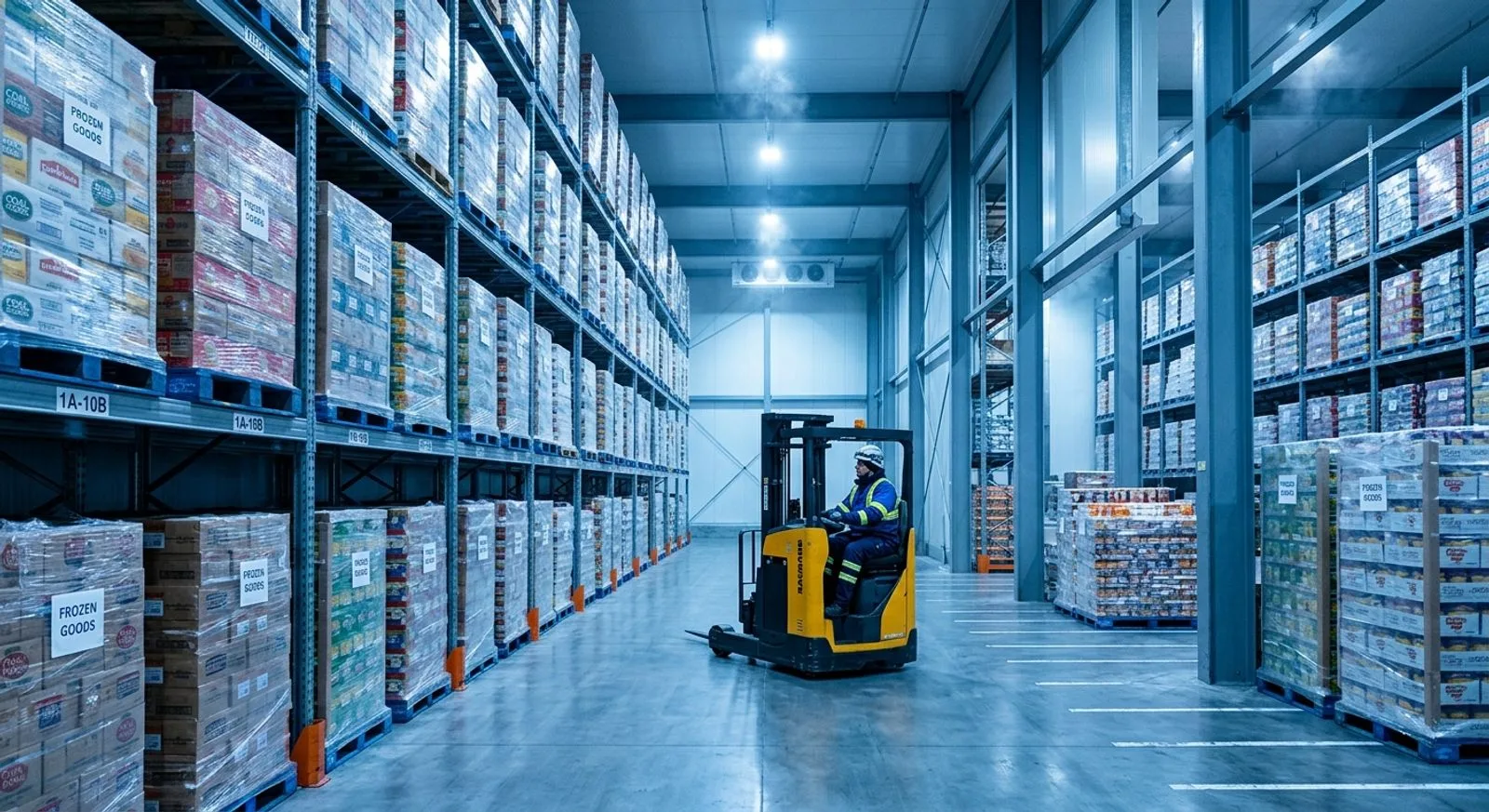
Texas is not only a producing state, it is a corridor. Product moves through it on I-35, I-10, and I-45, crosses the border at Laredo, and arrives through the Port of Houston. That traffic has built a dense network of cold storage, third-party logistics, and cross-dock operations along the interstate spine from the Rio Grande Valley to Dallas-Fort Worth, and those facilities carry food safety obligations many operators underestimate.
Storage and distribution sites certify under their own SQF Food Safety Code, and the failure modes look nothing like a processing plant's. Auditors focus on temperature control and the integrity of your monitoring records, on segregation of allergens and non-food chemicals, on pest control in buildings with doors that open hundreds of times a day, and on whether your traceability system can actually reconstruct which lot went onto which outbound trailer. The most common finding we see is not a missing procedure. It is a temperature excursion with no documented disposition decision, or a receiving log that proves the product was accepted but not that anyone verified the trailer.
We build cold chain systems around the way the site really runs: dock scheduling, driver behavior, seasonal volume swings, and the reality that a Gulf Coast summer punishes refrigeration equipment in ways a written SOP cannot anticipate. That includes defensible temperature mapping for your storage areas, calibration schedules your maintenance team can hold to, and clear decision authority for who releases or rejects a load at two in the morning when the QA manager is asleep.
For operators serving cross-border trade, we also align your SQF documentation with the import and export records your customers and customs brokers require, so the same evidence serves both purposes instead of duplicating work.
Our Proven SQF Implementation Process
We follow a structured, four-step methodology designed to minimize operational disruption while building a food safety system your team can maintain after we leave.
Gap Assessment
An on-site walkthrough of your Texas facility and a detailed review of your existing paperwork against the SQF Code. You receive a findings report ranked by risk and a project timeline you can budget against.
System Customization
We write your food safety plan, HACCP validation, prerequisite programs, SOPs, and record-keeping logs around your actual equipment, shifts, and product mix rather than a generic template.
Implementation & Staff Training
Comprehensive GMP and record-keeping training for supervisors and line staff, establishing daily routines that hold up on a normal production day, not just during preparation week.
Mock Audit & Audit Day
A full mock audit dress rehearsal, close-out of remaining gaps, and on-call support during your certification audit so someone who knows your system is reachable when the auditor asks a hard question.
Is Your Texas Facility Ready for an SQF Audit?
These are five things an auditor will verify within the first hour of walking into your plant. Toggle what is genuinely true for your site today to get an honest read on your readiness.
Food Safety Consulting Built for the Texas Food Industry
Texas does not have one food industry. It has a dozen, spread across a state large enough that a consultant working in Amarillo and a consultant working in Brownsville are solving different problems in different regulatory lanes. A food safety system that works in a Panhandle beef plant will not transfer cleanly to a Rio Grande Valley produce packer, and pretending otherwise is how facilities end up with documentation that describes a plant nobody recognizes.
Protein Processing: The Panhandle and East Texas
The Texas Panhandle around Amarillo, Dumas, and Cactus is one of the densest cattle feeding and beef processing regions in North America, and East Texas carries a long-established poultry industry through towns like Nacogdoches, Center, and Mount Pleasant. Protein plants face the hardest version of the SQF challenge because they are usually operating under continuous USDA FSIS or state inspection at the same time. Your HACCP plan already exists and is already scrutinized daily, which sounds like an advantage until an SQF auditor asks for validation evidence, verification records, and a food safety culture program that regulatory inspection never required. We work with the plan you have rather than replacing it, layering SQF requirements onto an inspected system so you are not maintaining two parallel realities.
Dairy, Produce and the Growing Middle
Erath County and the Stephenville area remain a center of Texas dairy, while dairy production has expanded significantly across the Panhandle around Dalhart and Muleshoe. Dairy processors carry pasteurization controls and Grade A obligations that intersect with SQF in ways that reward careful document design. In the Rio Grande Valley, citrus, onions, and mixed produce operations face the Produce Safety Rule alongside buyer-driven GFSI demands, and packinghouses there often need water testing, worker hygiene, and traceability programs built close to harvest timing.
Manufacturing and Distribution: DFW, Houston and San Antonio
The metros are where most first-time SQF certifications originate. Dallas-Fort Worth has deep snack food, bakery, and prepared foods manufacturing along with enormous distribution capacity. Houston brings port-driven import and export activity, seafood handling, and a large co-packing and ingredient sector. San Antonio and the I-35 corridor toward Austin have seen steady growth in specialty, natural, and private label manufacturing, much of it driven by brands whose retail buyers require certification before a product reaches shelf.
Co-packers and private label manufacturers in these markets face a specific pressure: each customer may demand a different standard, a different set of specifications, and their own audit on top of your certification. We design systems that answer multiple customer requirements from one documented framework, so adding a new account does not mean rebuilding your quality system from scratch.
What Actually Determines Whether You Pass
Across every one of these sectors, the facilities that struggle share a pattern. The documentation is not wrong, it is disconnected. Someone wrote procedures describing an ideal plant, the floor runs a different way that works fine, and the auditor finds the gap between them within two hours. Our entire method is built to close that gap before audit day by writing the system around what your people actually do, then improving the practice where it genuinely needs improving.
That approach takes longer at the start than issuing a template. It is also the difference between a certification you keep and a certification you have to rescue every year.
SQF Consulting for Practical, Plant-Floor Operations
Our clients are the people who have to pass the audit: QA managers, plant managers, and owners who cannot halt production to build a certification program. We design systems around your sector and your constraints.
Texas SQF Certification & Food Safety FAQs
Straight answers to the questions Texas food manufacturers ask us most often before starting certification.
What is SQF certification, and why is my buyer asking for it?
SQF (Safe Quality Food) is a food safety certification programme benchmarked against the Global Food Safety Initiative, which means major retailers and foodservice distributors accept it as proof that your facility manages food safety to an internationally recognised standard. Buyers ask for it because it lets them satisfy their own supplier approval requirements without auditing every vendor themselves. In practice, certification is rarely something a manufacturer pursues voluntarily. It usually arrives as a condition attached to a contract, often with a deadline attached.
How long does SQF certification take for a Texas facility?
For most facilities the honest range is three to nine months, and where you land depends almost entirely on what already exists. A plant with a functioning HACCP plan, disciplined records, and an experienced QA lead moves quickly. A plant starting from informal practices and paper stored in three different offices needs longer, because the SQF Code requires evidence of your system operating over time, and you cannot manufacture history retroactively. A gap assessment is how you get a real timeline for your site rather than a guess. We would rather tell you nine months at the start than promise four and put you in front of an auditor unprepared.
What does SQF consulting cost?
Consulting fees vary with facility size, product risk, number of production lines, and how much of the work your internal team can absorb. Separate from consulting, you will also pay your certification body directly for the audit itself, and that fee scales with audit duration and your site's complexity. Any consultant quoting a firm price before seeing your facility is guessing. After a gap assessment we can scope the work accurately, and we will tell you plainly which parts your team can handle internally to reduce the cost.
Do you work to SQF Edition 9 or SQF Edition 10?
Both. The SQF Code is published in editions by SQFI, and which edition your audit is scored against is determined by your certification body and your audit date rather than by preference. Confirming that is one of the first things we do at the gap assessment, because it shapes how your documentation is built. If your Texas site is already certified under Edition 9, we map the differences against your existing system, revise the documents and programs that actually change, and retrain the affected staff — we do not rebuild a system that already works. If this is a first certification, we build directly to the edition you will be audited against. For your specific transition timing, confirm the dates with your certification body or SQFI.
Do I still need SQF if my plant is already under USDA or state inspection?
Yes, if your customer requires it. Regulatory inspection and GFSI certification answer to different masters. USDA FSIS or Texas Meat Safety Assurance inspection verifies that you meet legal requirements to operate. SQF certification demonstrates to a commercial buyer that your food safety management system meets a global benchmark, and it covers ground regulatory inspection does not, including food safety culture, supplier approval programmes, and management review. The good news is that an inspected plant usually has a strong foundation to build on.
Which Texas agency regulates my facility?
It depends on what you make. The Texas Department of State Health Services licenses food manufacturers and wholesalers, and its Meat Safety Assurance programme operates the state inspection system for meat and poultry plants not under federal inspection. The Texas Department of Agriculture administers produce safety inspections under the FSMA Produce Safety Rule. Federally inspected protein plants answer to USDA FSIS, and most human food manufacturers also carry FDA preventive controls obligations. Facilities frequently sit under more than one, which is exactly why a single integrated system beats separate binders.
What happens if we fail our audit or receive non-conformances?
Most non-conformances are correctable within a defined response window set by your certification body, and receiving some is common rather than catastrophic. What matters is the quality of your corrective action: a genuine root cause analysis, a fix that addresses the cause rather than the symptom, and evidence the fix is holding. Weak corrective actions are what turn a manageable finding into a serious problem at the next audit. If you have already been audited and are working against a deadline, we can step in at that stage.
How should we prepare for an unannounced audit?
By building a system that does not require preparation. Unannounced audits expose the gap between a facility that maintains its programme continuously and one that revives it a fortnight before a scheduled visit. Practically, that means records completed the day the work happens, internal audits actually conducted on schedule, and supervisors who know their responsibilities without a refresher. Facilities that operate this way find unannounced audits uneventful, which is the entire point.
“An auditor is not really reading your binder. They are checking whether the plant in front of them behaves like the plant your documents describe. Every hour spent making those two things match is worth ten spent rewriting procedures nobody on the floor has read.”
Partner with a Trusted Texas SQF Consultant
Whether you are pursuing certification for the first time or strengthening an existing food safety system, we build practical programs your team can actually maintain. The first consultation is free.