

SQF CERTIFICATION CONSULTING · GFSI-BENCHMARKED · DALLAS & NORTH TEXAS
Food Safety & SQF Consultant in Dallas
Work with an experienced SQF consultant in Dallas to build a food safety system that holds up on audit day and on an ordinary Tuesday. We deliver HACCP-based food safety plans, SQF documentation, supplier and traceability programs and full mock audits for food manufacturers, tortilla and snack producers, protein plants, dairy and beverage processors, co-packers and cold storage operators across Dallas County, Tarrant County and the wider Metroplex.
Why Dallas Food Businesses Are Suddenly Being Asked for SQF
Most Dallas food manufacturers do not go looking for SQF certification. It arrives in an email from a customer, usually with a deadline attached. A regional grocery chain updates its supplier requirements. A national brand owner decides every co-packer in its network needs GFSI-benchmarked certification by the end of the fiscal year. A distributor that has bought from you for a decade sends a supplier questionnaire with a box you cannot tick.
Dallas-Fort Worth feels this earlier and harder than most markets, because of what the Metroplex actually is. This is one of the largest inland distribution hubs in North America. The concentration of grocery distribution centres, third-party logistics operators and national co-packing capacity across Dallas, Fort Worth, Garland, Arlington and the Alliance corridor means a disproportionate number of local food businesses sell into buyers who impose GFSI requirements as a matter of policy. When a plant in Mesquite supplies a brand that lists nationally, that brand's standards land on the Mesquite plant's floor.
The gap that follows is rarely about food safety practice. It is about evidence. Most of the facilities we walk into are run by people who genuinely understand their product and their hazards. What is missing is the documented system that proves it: a validated HACCP plan rather than a generic template, prerequisite programs written around the equipment actually installed, and records that show monitoring happened at the time of the work rather than assembled the week before an auditor arrives.
That is the work. Not teaching a competent operation how to make safe food, but building the system that lets an auditor verify what your team already does, in a structure the SQF Code recognises and in the edition your certification body will audit you against.
SQF Certification & Food Safety Consulting in Dallas
Whether a retail buyer has just made certification a condition of your next purchase order, or an audit date is approaching faster than your team can prepare, we take the documentation and audit preparation off your plate without stopping production. Every engagement is scoped from a site visit rather than a template, and built to the edition of the SQF Code your certification body will audit you against, whether that is Edition 9 or Edition 10.
SQF Gap Assessment
An on-site walkthrough of your Dallas-Fort Worth facility and a line-by-line review of your existing paperwork against the SQF Code, scored to the edition your certification body will audit you against. We rank every finding by risk and give you a realistic timeline and budget you can take to ownership before you commit to an audit date.
Book a gap callSYSTEM BUILDSQF Documentation & SOPs
We write your food safety manual, SOPs, prerequisite programs, specifications and record-keeping logs around your actual equipment, shift patterns and product mix, structured so an Edition 9 system can be carried forward to Edition 10 without starting again. The test we apply is whether a shift supervisor can run it on a busy afternoon without calling the QA office.
View serviceHACCP & PREVENTIVE CONTROLSHACCP Plans & Preventive Controls
A documented, validated HACCP plan built around your real biological, chemical, physical and allergen hazards, with critical control points you can defend with data. We align it with the preventive controls your FDA obligations require, or with the HACCP system a USDA FSIS or Texas state grant of inspection already demands, so one hazard analysis serves every purpose rather than three.
View serviceAUDIT PREPMock & Internal SQF Audits
A full dress rehearsal of audit day, from the opening meeting through the facility walkthrough and records review. We interview your line staff the way an auditor will, run a traceability exercise against a real lot code, surface the findings that cost points, and close them while there is still time to fix them properly.
View serviceSUPPLIER & FSVPSupplier Approval & FSVP Programs
North Texas plants pull ingredients through one of the busiest cross-border supply corridors in the country. We build approved supplier programs with meaningful specifications, certificate-of-analysis review that someone actually performs, and documented Foreign Supplier Verification Program files for imported ingredients, so supplier control is a working process rather than a folder of expired certificates.
View serviceEDITION 9 TO 10Edition 9 to Edition 10 Transition
If you already hold certification to Edition 9, you do not need a new system. We map your existing manual, prerequisite programs and records against the Edition 10 structure, isolate what genuinely has to change, revise only those documents, and brief the people whose daily tasks are affected. Managed as a controlled change, with the revision history your auditor will ask to see.
View serviceHow Long SQF Certification Really Takes
The honest answer for a Dallas facility starting from a functioning but undocumented operation is four to eight months to a certification audit. The range is wide because it depends less on how fast we write and more on one thing that cannot be compressed: records have to accumulate.
This is the part that surprises people. You can have a complete, well-written food safety manual finished in weeks. But an auditor is not assessing whether your system exists on paper. They are assessing whether it has been operating. That means monitoring records, verification checks, internal audit findings, corrective actions closed out, and a traceability exercise run against a real lot. None of that can be produced retroactively without it being obvious, and attempting it is one of the fastest ways to damage credibility with a certification body.
The realistic sequence looks like this. Gap assessment and scoping takes two to three weeks. Documentation development runs six to ten weeks depending on product complexity and how many lines are in scope. Implementation and record generation is the long pole, typically two to four months, and it runs in parallel with your normal production. Mock audit and close-out adds another three to four weeks. Then your certification body schedules the audit on their availability, not yours, which is worth factoring in early.
Where Dallas projects compress is when a facility already holds another certification, or has a genuinely functioning quality system that simply was not built to the SQF structure. Where they stretch is when the gap assessment uncovers physical remediation — drainage, segregation, air handling — that needs capital approval. That is a budgeting conversation, not a documentation one, which is exactly why we surface it in week two rather than month five.
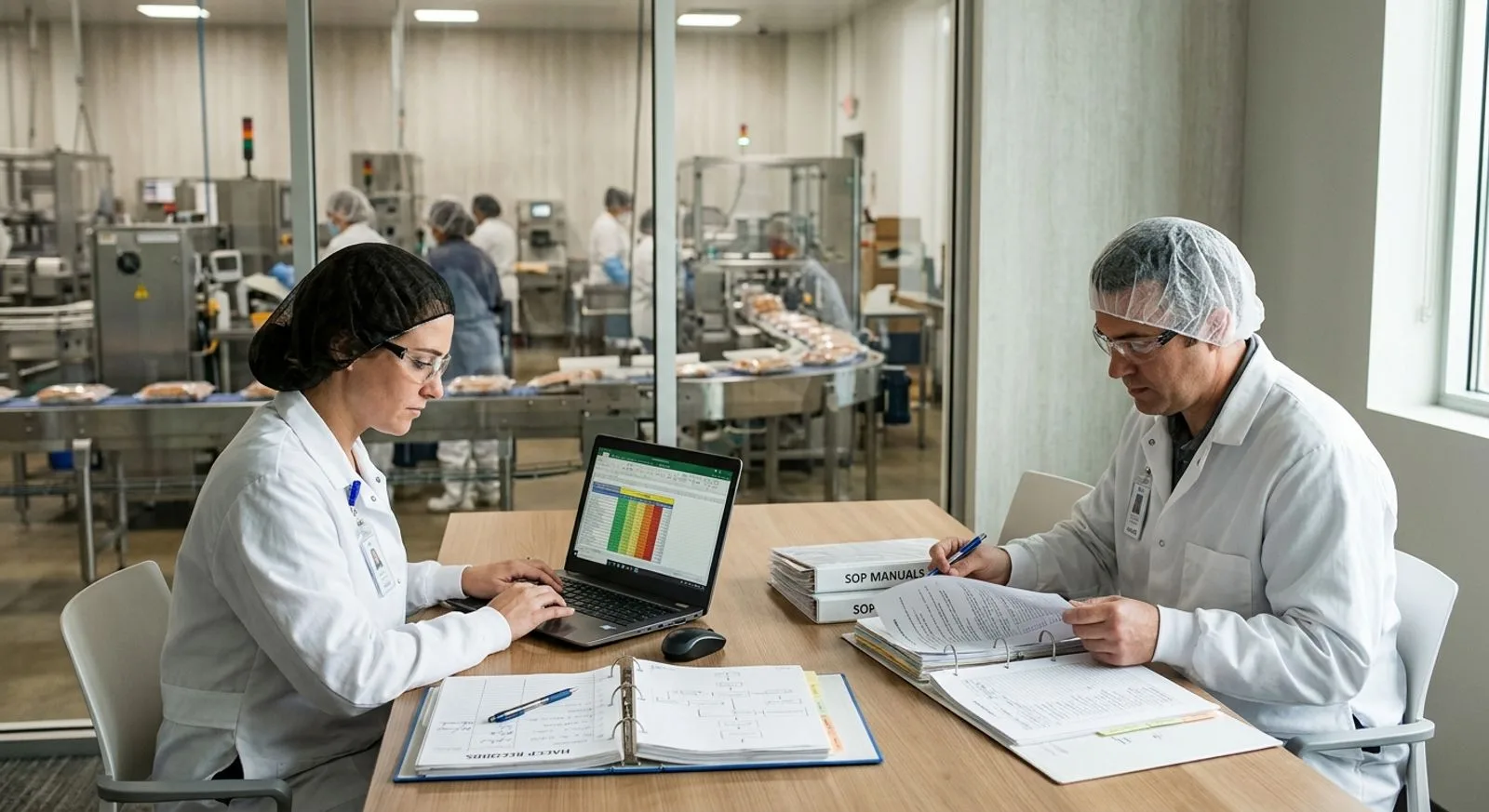
Our SQF Implementation Process
A structured four-step method designed to minimise disruption to production while building a food safety system your team can still run confidently after we leave.
Gap Assessment
An on-site walkthrough of your Dallas-Fort Worth facility and a detailed review of your existing documentation against the SQF Code. You receive a findings report ranked by risk, plus a project timeline and scope you can budget against before committing to an audit date.
System Customisation
We build your food safety manual, HACCP validation, prerequisite programs, SOPs and record-keeping logs around your actual lines, shifts and product mix, and align them with your FDA, USDA FSIS or Texas state obligations so nothing is documented twice.
Implementation & Verification
Your team puts the system into operation while we verify it is holding on a normal production day: records completed as the work happens, monitoring inside defined limits, and floor practice matching the documented procedure. We work around your shift patterns rather than pulling crews off the line.
Mock Audit & Audit Day
A full mock audit dress rehearsal, close-out of remaining gaps, and on-call support during your certification audit so someone who knows your system is reachable the moment an auditor asks a difficult question.
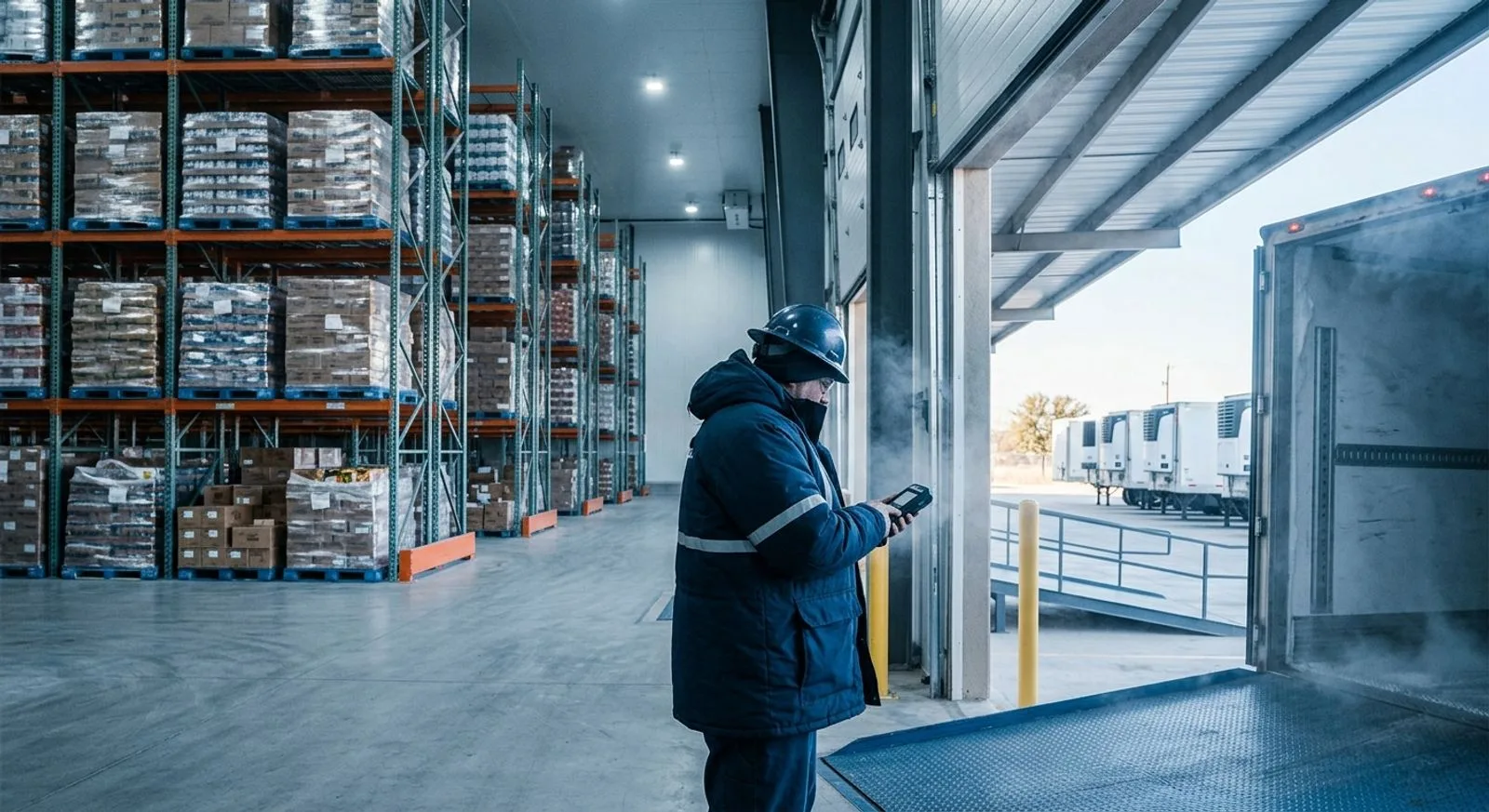
Grid Reliability, Heat and Distribution: The Dallas Variables
Every region puts its own pressure on a food safety system. In Dallas-Fort Worth, three variables come up in almost every engagement, and a system that ignores them tends to look thin under questioning.
The first is power continuity. Texas operates its own electricity grid, largely separate from the two interconnections that serve the rest of the continental United States. February 2021 demonstrated what that can mean for facilities holding temperature-sensitive product. An auditor reviewing your system will reasonably want to see that a prolonged power loss has been thought through: what your corrective action procedure actually instructs, how product disposition decisions get made and documented, at what point held stock is assessed against defined limits, and who has the authority to make that call at two in the morning. A generic 'notify management' line does not survive that conversation.
The second is heat. Summer ambient temperatures in North Texas routinely sit above 100°F for extended stretches. That loads your cold chain at exactly the points auditors look hardest: dock doors, staging areas, trailer pre-cooling and the interval between a pallet leaving refrigeration and entering a trailer. Facilities that define door-open limits, monitor staging temperatures and can show real excursion records with genuine corrective actions attached are in a far stronger position than those whose logs show an unbroken run of perfect readings, which tends to invite scrutiny rather than deflect it.
The third is distribution intensity. The Metroplex is a logistics hub, which means a large share of local facilities either operate cold storage themselves or ship through third parties within hours of production. Traceability has to work across that handoff. When we run a mock recall, we deliberately trace through the 3PL relationship rather than stopping at your dock, because that is where the exercise usually breaks — and it is far better to discover it in a rehearsal than during a real event.
Which Food Safety Requirements Apply to Your Dallas Facility
Dallas facilities answer to more than one authority, and which one applies to you changes the shape of your food safety system. Use this as an orientation, then let us confirm the detail for your specific site and product mix, including which edition of the SQF Code, Edition 9 or Edition 10, your certification body will audit you against.
| Facility type | Primary oversight | Baseline legal requirement | Typical SQF code |
|---|---|---|---|
| Food manufacturer or processor (non-meat) | FDA, with Texas Department of State Health Services licensing | FDA facility registration, Texas food manufacturer licence, preventive controls and a documented food safety plan | SQF Food Safety Code for Manufacturing |
| Meat or poultry processor | USDA FSIS, or the Texas state meat and poultry inspection program | Grant of inspection, HACCP system under the applicable meat and poultry inspection requirements, sanitation SOPs | SQF Food Safety Code for Manufacturing |
| Dairy processor | FDA and the Texas DSHS milk and dairy program | Grade A permit where applicable, pasteurisation controls, preventive controls | SQF Food Safety Code for Manufacturing |
| Bakery, tortilla and snack manufacturer | FDA, with Texas DSHS licensing | Facility registration, preventive controls, allergen controls and a documented food safety plan | SQF Food Safety Code for Manufacturing |
| Co-packer and private label manufacturer | FDA, plus your brand owner's own standards | Preventive controls, plus contractual food safety and allergen requirements from each brand owner | SQF Food Safety Code for Manufacturing |
| Importer of produce or ingredients | FDA, Foreign Supplier Verification Program | Documented FSVP for each foreign supplier, hazard analysis and supplier verification records | SQF Food Safety Code for Manufacturing or Storage and Distribution |
| Cold storage, 3PL and distribution | FDA, sanitary transportation and storage provisions | Facility registration where applicable, temperature monitoring and traceability records | SQF Food Safety Code for Storage and Distribution |
| Retail food facility or commissary kitchen | City of Dallas or Dallas County environmental health | Health permit, certified food manager, routine inspection | SQF Fundamentals or Manufacturing |
“An auditor is not really reading your binder. They are checking whether the plant in front of them behaves like the plant your documents describe. Every hour spent making those two things match is worth ten spent rewriting procedures nobody on the floor has read.”
What Working With Us Actually Looks Like
No templates handed over at the door, and no consultant who disappears the week before your audit. Here is what a Dallas engagement involves in practice.
On-site, not remote-only
We walk your floor. Drainage, product flow, segregation, air movement and traffic patterns cannot be assessed over a video call, and these are the findings that cost the most to fix late. On-site work across Dallas, Tarrant, Collin and Denton counties is standard, not an upcharge.
Written around your equipment
Your SOPs reference the filler you actually run, the sanitation chemicals actually in your closet and the shift pattern your crews actually work. Generic documentation is the single most common reason a system fails to hold up once the consultant leaves.
Scoped to a fixed price
After the gap assessment you receive a defined scope with a fixed fee. You are not exposed to open-ended hourly billing on a project whose end date depends on how thorough we decide to be.
Built for the right edition
We confirm with you which edition of the SQF Code your certification body will audit against before we write anything, and structure the system so an Edition 9 build can carry forward to Edition 10 as controlled revisions rather than a rewrite.
Your team is trained as we go
The people who will run the system are involved in building it. By audit day your QA lead, sanitation supervisor and line leads can explain their own procedures without reading from a page, which is precisely what an auditor tests.
Traceability tested end to end
We run a mock recall against a real lot code, through your third-party logistics provider where relevant, with a defined time target. Discovering that a trace takes eleven hours is useful in a rehearsal and costly during an actual incident.
Records that survive scrutiny
We design monitoring forms that are quick enough to be completed at the time of the work. Records that are genuinely inconvenient get reconstructed later, and reconstructed records are visible to an experienced auditor.
Reachable on audit day
Someone who knows your system is on call while your certification audit is in progress. When an auditor asks a question your team has not faced before, the answer should not have to wait.
Is Your Dallas Facility Ready for an SQF Audit?
These are five things an auditor will verify within the first hour of walking into your plant. Toggle what is genuinely true for your site today for an honest read on where you stand.
Food Safety Consulting Built for the Dallas Food Industry
Dallas-Fort Worth does not have a single dominant food sector, and that shapes how we work here. Within an hour's drive you will find high-volume tortilla and masa production, snack and bakery manufacturing at national scale, protein plants running under federal or state inspection, dairy and beverage processing, a dense co-packing sector serving brands headquartered elsewhere, and some of the largest refrigerated distribution capacity in the country.
Each of those carries a different centre of gravity. For a tortilla or bakery operation, allergen management and sanitation validation usually dominate, particularly where shared lines run wheat-based and corn-based products through the same equipment. For protein, the relationship between your existing inspection-mandated HACCP system and the SQF structure needs careful handling so you are not maintaining two parallel hazard analyses that slowly diverge. For co-packers, the hard part is rarely your own standard — it is reconciling the differing food safety and allergen requirements imposed by every brand owner whose product you run, and proving to each of them that their requirements are being met on a shared line.
For cold storage and 3PL operators, the SQF Food Safety Code for Storage and Distribution applies rather than the manufacturing code, and the emphasis shifts almost entirely to temperature integrity, stock rotation, segregation, pest control across large footprints, and traceability through inbound and outbound movements at volume.
What these have in common is that none of them can pause. Nobody in this market can take a production line down for six weeks to build a certification program. Every system we design is built to be implemented alongside live production, with documentation rolled out in a sequence that matches your shift patterns and your seasonal peaks rather than working against them. That constraint is not an inconvenience we tolerate — it is the primary design input.
SQF Consulting for Practical, Plant-Floor Operations
Our clients are the people who have to pass the audit: QA managers, plant managers and owners who cannot halt production to build a certification program from scratch. We design around your sector and your constraints.
Dallas SQF Certification & Food Safety FAQs
The questions Dallas-Fort Worth QA managers, plant managers and owners ask us most often, answered directly.
How much does SQF certification cost in Dallas?
There are two separate costs. The certification body charges for the audit itself, priced on facility size, product risk and audit duration. Consulting is the second cost and depends on your starting point. We quote a fixed scope after the gap assessment. Budget separately for any physical remediation the assessment uncovers, since drainage, segregation or air handling work is capital expenditure rather than consulting fees.
What is the difference between SQF Edition 9 and Edition 10?
Both are editions of the SQF Code published by SQFI. Edition 10 is the more recent revision. We map your existing Edition 9 system against the Edition 10 structure and revise only what is affected. Confirm with your certification body or SQFI in writing which edition your next audit will be conducted against, since that determines what we build to.
We are already certified to Edition 9. Do we have to start over?
No. The transition is handled as controlled change management: map the differences, isolate what genuinely has to change, revise those documents through your normal document control process with proper version history, update affected records, and brief the staff whose daily tasks are affected.
How long does SQF certification take from a standing start?
For a Dallas facility with a functioning but undocumented operation, four to eight months to a certification audit is realistic. The binding constraint is how long records must accumulate before there is evidence the system has genuinely been operating. Your certification body also schedules the audit on their own availability, which is worth confirming early.
Do you provide an SQF practitioner for our site?
No. We do not provide SQF practitioner support or act as your site's practitioner. That role belongs to someone employed at your facility. We build the system your team runs and make sure the people responsible understand how it works.
Do you run SQF training courses or issue certificates?
No. We do not deliver official SQF courses or issue training certificates. SQF training delivery and certification are tightly controlled by SQFI through their own approved channels. We provide practical guidance to your team as we build the system together.
Can you handle our re-certification audit?
We do not provide re-certification services. Re-certification is conducted by your certification body on their own cycle. We can help keep your system in good order between audits through system verification and internal review.
Can you guarantee we will pass the audit?
No, and you should be cautious of anyone who says otherwise. The audit outcome is determined solely by your certification body and the auditor assigned to your site. What we control is preparation: a system built to the correct edition of the code, records that demonstrate genuine operation, a team that can explain their own procedures, and a mock audit that surfaces findings while there is still time to close them properly.
How does a power outage affect our SQF system?
It affects your corrective action and product disposition procedures more than anything else. Because Texas operates a largely separate electricity grid, auditors in this market often probe how a prolonged outage would be handled. Your system should define who assesses affected product, against what limits, how the decision is documented, and what happens to stock whose temperature history cannot be verified.
Which areas around Dallas do you cover?
We work on-site across Dallas and Tarrant counties and the surrounding Metroplex, including Fort Worth, Arlington, Irving, Garland, Mesquite, Plano, Grand Prairie, Carrollton and the Alliance corridor, and we travel to facilities elsewhere in North Texas. Tell us where your plant is and we will confirm scheduling.
Working With a Dallas SQF Consultant: Coverage & Logistics
Practical coverage matters more than a head office address. What determines whether a consulting engagement works is how often someone is physically on your floor, and how quickly they can get there when something needs looking at before an audit.
We work on-site throughout the Metroplex: Dallas, Fort Worth, Arlington, Irving, Garland, Mesquite, Plano, Grand Prairie, Carrollton and the industrial corridors around Alliance and South Dallas, along with facilities further out across North Texas. Site visits are scheduled around your production reality, which for many plants here means early mornings, second shift or weekend sanitation windows rather than a nine-to-five that suits the consultant.
Between visits, documentation development, review cycles and supplier programme work run remotely, which keeps costs sensible and avoids charging you travel time for work that does not require a walkthrough. The split typically settles at intensive on-site time during the gap assessment and the mock audit, with steadier remote collaboration through the documentation and implementation phases.
If your operation extends beyond Dallas, or you run multiple sites across the state, our broader Texas food safety and SQF consulting coverage explains how multi-site programmes are structured so that a shared system can be applied consistently without ignoring what is genuinely different about each plant. You can also review the full range of SQF services we deliver, from first-time certification through to Edition 9 to Edition 10 transition support.
The first conversation costs nothing and is genuinely diagnostic rather than a sales call. Tell us what your buyer or auditor has asked for, what your current documentation looks like and when the deadline falls, and we will tell you honestly whether it is achievable and what it will take.
Partner With a Trusted Dallas SQF Consultant
Whether you are pursuing certification for the first time because a buyer has asked for it, or strengthening a system that has already been through an audit, we build practical programs your team can maintain. Tell us what your buyer or auditor is asking for and we will map the path. The first consultation is free.