

SQF CERTIFICATION CONSULTING · GFSI-BENCHMARKED · GEORGIA SPECIALISTS
Food Safety & SQF Consultant in Georgia
Partner with a certified SQF consultant in Georgia to build practical, audit-ready food safety systems to SQF Edition 9 or Edition 10. We specialize in HACCP-based food safety plans, gap assessments, SQF documentation, staff training, and mock audits for poultry processors, peanut and nut processors, produce packers, co-packers, cold storage operators, and food manufacturers from Gainesville and Albany to Atlanta and the Port of Savannah.
SQF Certification & Food Safety Consulting in Georgia
Whether a national retail buyer has just made SQF certification a condition of your next contract, or a co-manufacturing agreement is contingent on passing an audit you are not ready for, our Georgia food safety consultants handle the heavy lifting. We build to SQF Edition 9 and Edition 10, and we take documentation, staff training, and audit preparation off your plate without stopping production.
SQF Gap Assessment
An on-site walkthrough of your facility and a line-by-line review of your existing paperwork against the SQF Code. We confirm with your certification body which edition your audit will be scored against, rank every finding by risk, and hand you a realistic timeline you can take to ownership before you commit to an audit date.
Book a gap callSYSTEM BUILDSQF Documentation & SOPs
We write your food safety plan, HACCP validation, prerequisite programs, SOPs, and record-keeping logs around your actual equipment, shift patterns, and product mix, structured to the SQF edition that applies to your site. The goal is a system your second-shift supervisor will actually run at two in the morning, not a binder that only makes sense on audit day.
View serviceSTAFF TRAININGStaff Training & Implementation
Structured SOP training, daily checklists, and practical guidance for your floor leads and supervisors, delivered in English and Spanish where your crews need it. We make sure your production team understands the system and executes standard operating procedures consistently every shift, including through line changeovers and seasonal ramp-up.
Talk to usAUDIT PREPMock & Internal SQF Audits
A full dress rehearsal of audit day, from the opening meeting through the facility walkthrough and records review. We interview your line staff the way an auditor will, surface the non-conformances that cost points, and close them out while there is still time to fix them properly rather than argue them at closing.
View serviceCORRECTIVE ACTIONCorrective Action Support
If your audit has already happened and non-conformances landed, we help you run root cause analysis, build corrective and preventive actions, and assemble the evidence package your certification body expects inside the response window. Speed matters here, and so does getting the root cause right the first time.
Get help nowEDITION TRANSITIONEdition 9 to Edition 10 Transition
If your site is certified under Edition 9 and your next audit falls under Edition 10, we map the differences against the system you already run, revise only the documents and programs that genuinely change, update the affected records and training, and keep a clear revision history. An edition change should be a controlled update to a working system, not a rebuild.
View servicePoultry, Further Processing & USDA FSIS in Georgia
Georgia leads the United States in broiler production, and the corridor running from Gainesville down through Athens, Carrollton, and Albany contains one of the densest concentrations of poultry processing and further-processing capacity anywhere in the country. If you operate in that corridor, your food safety system has to satisfy two very different audiences at once, and conflating them is the most common structural mistake we see.
The first audience is USDA FSIS. If you slaughter or process meat and poultry, you already run under continuous or daily federal inspection, with a HACCP plan, sanitation SOPs, and pathogen performance standards that an inspector verifies on site. That system is a regulatory licence to operate. The second audience is your commercial buyer, who wants GFSI-benchmarked certification as evidence that your management system is sound beyond the regulatory minimum. SQF answers the second question, not the first.
In practice, poultry sites arriving at SQF certification are rarely starting from zero. The HACCP discipline is usually strong, the sanitation records are usually there, and the plant already knows how to host an inspector. What is typically missing is the management layer the SQF Code expects: documented food safety culture, management review with evidence of action, supplier approval programmes, internal audit, and a validated traceability exercise. We build that layer onto your existing FSIS framework rather than duplicating it.
That distinction matters commercially as well as technically. Maintaining two parallel documentation sets that describe the same plant in slightly different terms is how facilities generate non-conformances against themselves, because an auditor who finds a contradiction between your FSIS paperwork and your SQF paperwork will write up the contradiction. One system, mapped clearly to both audiences, is almost always the better answer.
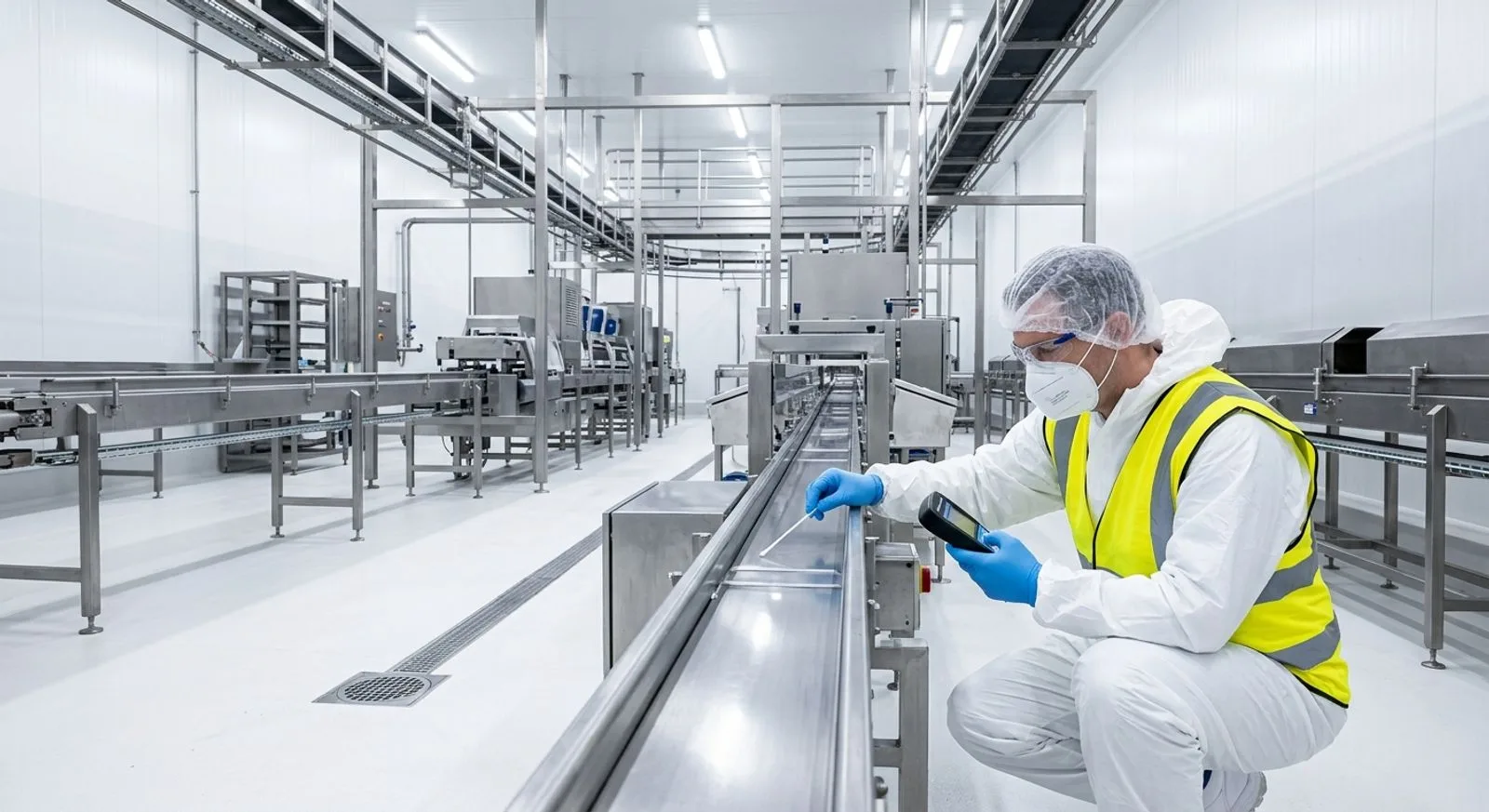
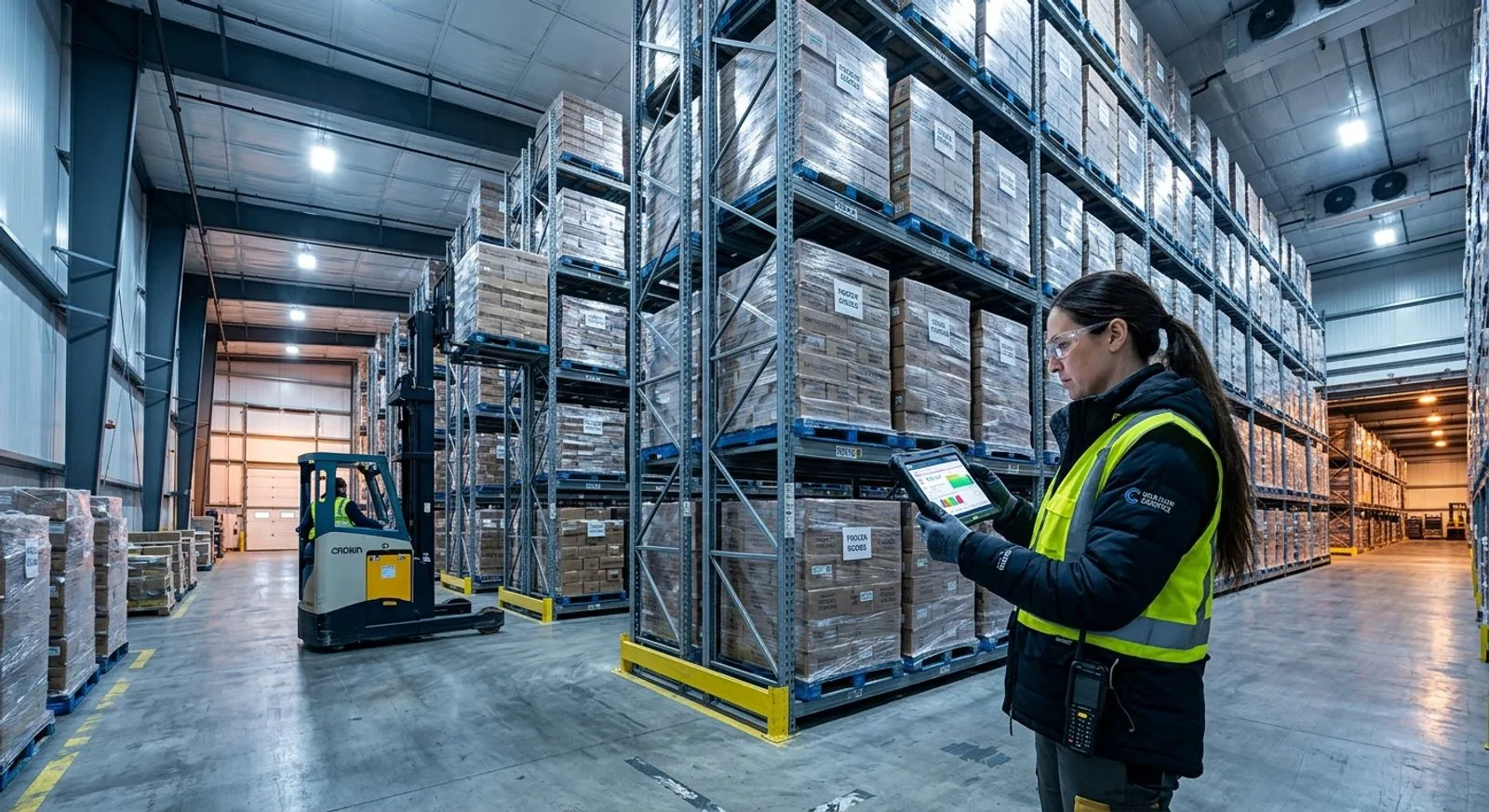
Cold Chain, the Port of Savannah & Supplier Verification
Georgia is a logistics state as much as a production state. The Port of Savannah is one of the busiest container ports on the US East Coast, and the interstate network converging on Atlanta has made the metro area a national hub for refrigerated warehousing, third-party logistics, and food distribution. A large share of the food that moves through Georgia was neither grown nor manufactured here.
That creates a specific set of SQF obligations. If you operate storage and distribution, your audit scope centres on temperature control and the evidence behind it, stock rotation, allergen segregation, pest control across large footprints, and traceability that survives cross-docking. Auditors look closely at the gap between your written temperature parameters and what your monitoring data actually shows over a full season, including the excursions you recorded and what you did about them.
For importers, there is a second obligation that SQF does not discharge. The Foreign Supplier Verification Program is a regulatory requirement the FDA enforces against you as the importer of record, and it is assessed separately from any certification you hold. SQF supplier approval and FSVP overlap heavily in the evidence they require, which is precisely why we build one consolidated supplier file and map clearly which document answers which requirement. Facilities that keep them apart usually end up collecting the same certificates twice.
FSMA 204 traceability sits on top of both. Several categories that move in volume through Georgia appear on the FDA Food Traceability List, including nut butters, fresh-cut produce, leafy greens, and shell eggs. Compliance dates for the rule have been subject to change by the FDA, so we treat the deadline as something to confirm against current FDA guidance rather than a fixed number to quote. The underlying requirement is stable: capture defined key data elements at each critical tracking event and produce them quickly when asked.
Our Proven SQF Implementation Process
We follow a structured, four-step methodology designed to minimize operational disruption while building a food safety system your team can maintain after we leave.
Gap Assessment
An on-site walkthrough of your Georgia facility and a detailed review of your existing paperwork against the SQF Code. You receive a findings report ranked by risk and a project timeline you can budget against, scheduled around your production peaks and planned line downtime.
System Customization
We write your food safety plan, HACCP validation, prerequisite programs, SOPs, and record-keeping logs around your actual equipment, shifts, and product mix rather than a generic template. Where you already run under USDA FSIS, we build onto that framework instead of duplicating it.
Implementation & Staff Training
Comprehensive GMP and record-keeping training for supervisors and line staff, establishing daily routines that hold up on a normal production day, not just during preparation week. Delivered bilingually where your crews need it.
Mock Audit & Audit Day
A full mock audit dress rehearsal, close-out of remaining gaps, and on-call support during your certification audit so someone who knows your system is reachable when the auditor asks a hard question.
Is Your Georgia Facility Ready for an SQF Audit?
These are five things an auditor will verify within the first hour of walking into your plant. Toggle what is genuinely true for your site today to get an honest read on your readiness.
Food Safety Consulting Built for the Georgia Food Industry
A production base with unusually broad risk profiles
Few states ask a food safety consultant to cover as much ground as Georgia does. Within a few hours' drive you will find federally inspected poultry slaughter and further processing, peanut shelling and nut butter manufacturing, Vidalia onion packing under a federal marketing order, pecan processing, blueberry and peach packing, large-scale shell egg production, bakery and snack manufacturing, beverage production, and some of the largest refrigerated distribution capacity in the Southeast.
Those operations do not share a risk profile. A nut butter line is managing a low-moisture pathogen environment where Salmonella can persist for long periods in dry conditions and where the validated kill step is the centre of the entire food safety argument. A fresh produce packing shed has no kill step at all, so the argument rests on agricultural water, harvest hygiene, equipment sanitation between lots, and cold chain discipline. A poultry further-processing plant is managing Listeria monocytogenes in a wet, cold, post-lethality environment where environmental monitoring is the thing an auditor will scrutinise hardest. A template built for one of these will fail in the others, and template-driven systems are the single most common reason first-time certification attempts go badly.
Why buyer scrutiny on Georgia processors runs high
Georgia's nut and low-moisture sector operates under more commercial scrutiny than most. The 2008 and 2009 Salmonella outbreak traced to a peanut processing operation in Blakely remains one of the most consequential food safety failures in modern US history, and it reshaped how buyers, regulators, and certification bodies think about low-moisture processing, environmental monitoring, and the integrity of certificates of analysis. Two decades on, procurement teams still apply sharper questions to nut and dried-ingredient suppliers than to almost any other category.
The practical consequence for a Georgia processor is that a clean certificate on the wall is not sufficient on its own. Buyers increasingly want to see the environmental monitoring data behind it, the trend analysis, the corrective actions taken when a presumptive positive appeared, and evidence that the testing programme is designed to find problems rather than to avoid finding them. We build programmes on that assumption, because a monitoring programme engineered to produce clean results is both commercially fragile and, in the judgement of a good auditor, evidence of a weak food safety culture.
Seasonality, labour, and systems that survive a shift change
Much of Georgia's produce and tree nut activity is strongly seasonal. Vidalia onion harvest, pecan season, blueberry and peach windows all concentrate enormous throughput into short periods, staffed in large part by workers who were not on site three months earlier. A food safety system that depends on institutional memory will not survive that pattern.
This is why we put disproportionate effort into the operational layer: short, legible SOPs; checklists that fit the actual sequence of a shift; bilingual training delivered to the people performing the task rather than to a file; and verification steps assigned to named roles rather than to a department. An unannounced audit landing in the middle of peak season will sample exactly the weeks when discipline is hardest to hold, and that is the honest test of whether a system is real.
What we do and what we deliberately do not do
We build and strengthen food safety management systems, prepare facilities for certification, and support them through audit day and beyond. We are independent of any certification body, which means we have no role in the audit decision and no influence over your result. Your certification body audits your site and determines the outcome, and the integrity of that separation is what makes certification worth anything.
We do not act as your SQF practitioner, because the SQF Code requires that role to be held by someone employed at your facility. We do not deliver official SQF training courses or issue SQFI certificates, which are controlled by SQFI through its own approved channels. We do not perform re-certification, which belongs to your certification body. What we do is make sure that when the auditor arrives, the plant in front of them behaves like the plant your documents describe.
SQF Consulting for Practical, Plant-Floor Operations
Our clients are the people who have to pass the audit: QA managers, plant managers, and owners who cannot halt production to build a certification program. We design systems around your sector and your constraints.
Georgia SQF Certification & Food Safety FAQs
Straight answers to the questions Georgia QA managers, plant managers and owners ask us most often.
What is SQF certification, and why is my buyer asking for it?
SQF (Safe Quality Food) is a food safety certification programme owned by SQFI and benchmarked against the Global Food Safety Initiative, which means major retailers and foodservice distributors accept it as proof that your facility manages food safety to an internationally recognised standard. Buyers ask for it because it lets them satisfy their own supplier approval requirements without auditing every vendor themselves.
How long does SQF certification take for a Georgia facility?
For most facilities the honest range is three to nine months, and where you land depends almost entirely on what already exists. A federally inspected poultry plant with mature HACCP discipline and strong records often moves quickly, because much of the foundation is already in place. A site starting from informal practices needs longer, because the SQF Code requires evidence of your system operating over time. If your operation has a hard seasonal peak, starting the build in your quiet period gives you a far more comfortable path.
Do you work to SQF Edition 9 or SQF Edition 10?
Both. The SQF Code is published in editions by SQFI, and which edition your audit is scored against is determined by your certification body and your audit date. Confirming that in writing is one of the first things we do at the gap assessment, because it shapes how your documentation is built. If this is a first certification, we build directly to the edition you will be audited against.
We are certified under Edition 9. How does the move to Edition 10 work?
As a controlled change, not a rebuild. We map the differences between the edition you are certified under and the one your next audit will be scored against, revise only the documents and programs that genuinely change, update the affected records and training materials, brief the staff whose responsibilities are affected, and keep a clear revision history so your auditor can see what changed and when. Confirm the applicable edition and your transition date with your certification body or SQFI in writing before you start.
We are already under daily USDA FSIS inspection. Why would we also need SQF?
Because they answer different questions. USDA FSIS inspection verifies that your poultry or meat operation meets federal legal requirements to operate, and it is not optional. SQF certification demonstrates to a commercial buyer that your food safety management system meets a GFSI-benchmarked global standard, covering areas FSIS does not assess in the same way, including food safety culture, supplier approval programmes, internal audit, and management review. Most Georgia poultry sites pursue SQF because a customer requires it, not because a regulator does.
Can our existing FSIS HACCP plan be used for SQF?
Largely, yes, and that is usually the efficient path. Your validated HACCP plan, sanitation SOPs, and supporting records are substantial assets, and we build the SQF management layer onto them rather than writing a parallel set. What we do not recommend is maintaining two documentation sets describing the same plant, because any contradiction between them is something an auditor can and will write up.
Do you provide an SQF practitioner for our site?
No. The SQF Code requires that role to be filled by someone employed at your facility who knows your operation and is present day to day, so it is not something an external consultant can hold on your behalf. What we do is build the system that person runs, and make sure they are confident operating it before we step back.
Do you run official SQF training courses or issue certificates?
No. Official SQF courses and the certificates that come with them are tightly controlled by SQFI through their own approved channels, and we are not one of them. Our training is practical implementation training for your team: how your SOPs work, what records need completing, and what an auditor will ask them.
Do you handle re-certification?
We do not provide re-certification services. Re-certification is conducted by your certification body against the applicable edition of the SQF Code. Where we help is in the preparation: keeping your system current, running internal and mock audits, and closing gaps before your next audit rather than after it.
We run a low-moisture or nut processing line. What will an auditor focus on?
Your validated kill step and your environmental monitoring programme, in that order. For low-moisture products the auditor wants to see that the lethality process is validated for your specific product and equipment, that it is monitored and verified in practice, and that your environmental monitoring programme is designed to detect contamination in the places it is most likely to hide rather than in the places most likely to test clean. Expect close attention to your trend data and to what you actually did when a presumptive positive appeared.
We import through the Port of Savannah. Does SQF cover our FSVP obligations?
No. The Foreign Supplier Verification Program is a regulatory obligation enforced by the FDA that applies to you as the importer, while SQF supplier approval is a certification requirement scored by your auditor. They overlap substantially, so we build one consolidated supplier file that satisfies both and map clearly which evidence answers which requirement.
Can you guarantee we will pass our SQF audit?
No, and you should be cautious of any consultant who says otherwise. Your audit is conducted and scored by an independent certification body, and no consultant has any role in that decision or any influence over the outcome. That independence is exactly what makes the certificate worth something to your buyer. What we can do is prepare your facility thoroughly, run a mock audit that surfaces problems while there is still time to fix them properly, and make sure nothing arrives as a surprise on audit day.
What happens if we fail our audit or receive non-conformances?
Most non-conformances are correctable within the response window set by your certification body, and receiving some is common rather than catastrophic. What matters is the quality of your corrective action: a genuine root cause analysis, a fix that addresses the cause rather than the symptom, and evidence the fix is holding.
What does SQF consulting cost?
Consulting fees vary with facility size, product risk, number of production lines, and how much of the work your internal team can absorb. Separate from consulting, you pay your certification body directly for the audit itself, and that fee scales with audit duration and site complexity. After a gap assessment we can scope the work accurately.
“An auditor is not really reading your binder. They are checking whether the plant in front of them behaves like the plant your documents describe. In a seasonal operation with high crew turnover, that means looking hard at your busiest weeks, not your quietest ones.”
Partner with a Trusted Georgia SQF Consultant
Whether you are pursuing certification for the first time or strengthening an existing food safety system before your next audit, we build practical programs your team can actually maintain. The first consultation is free.